

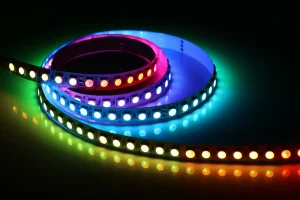
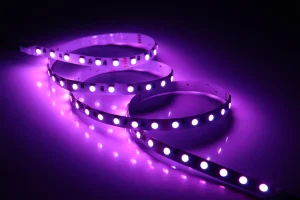
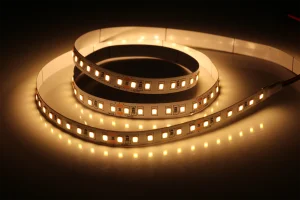
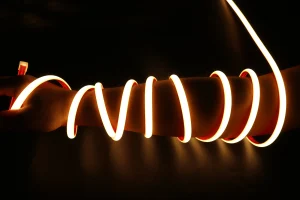





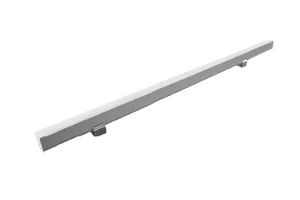
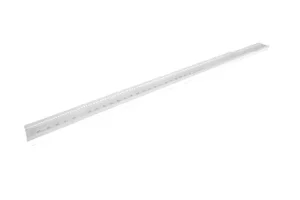
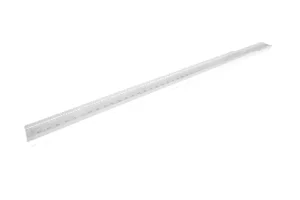
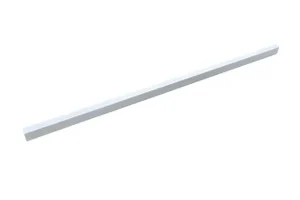
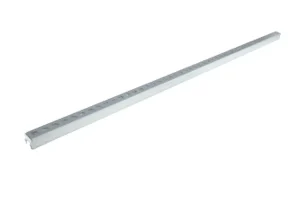
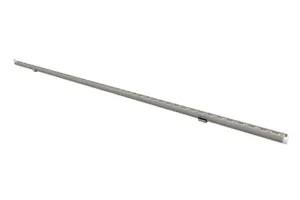




In the competitive landscape of LED lighting, what separates a premium LED strip that lasts 50,000 hours from a commodity product that fails in months is not just component sourcing — it is the depth and rigor of the testing protocol applied at every production stage. Wilgex has engineered a comprehensive, multi-phase inspection system that scrutinizes each strip light from the individual LED bead level through to the final packaged product. This article details the quality control journey that ensures every Wilgex LED strip leaving our factory meets the highest standards of brightness uniformity, electrical integrity, dimming performance, and mechanical durability.
1. Single Individual Precision Inspection: Powering Every LED
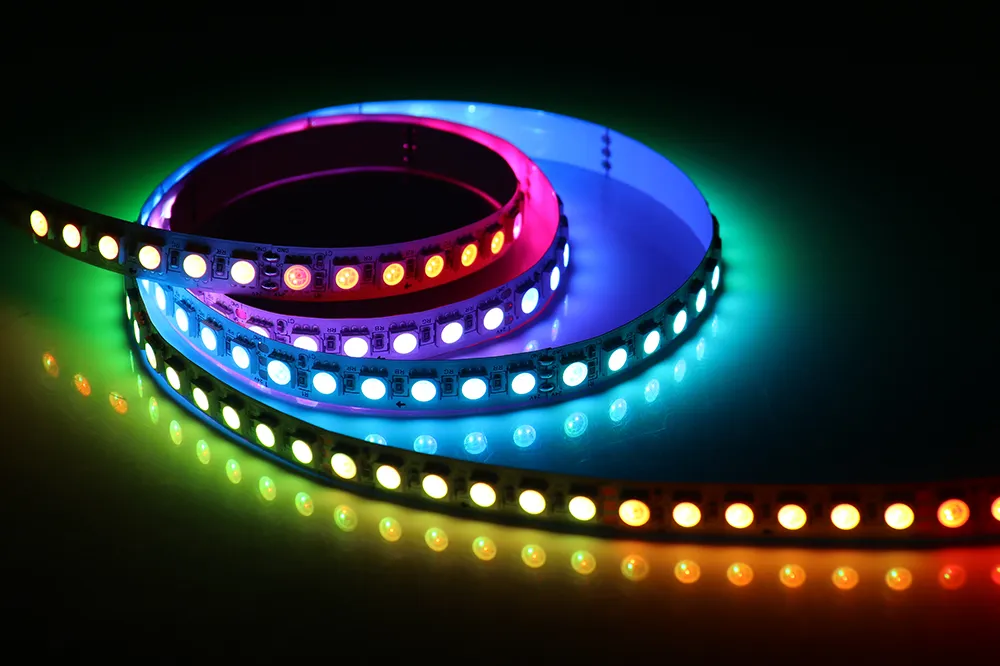
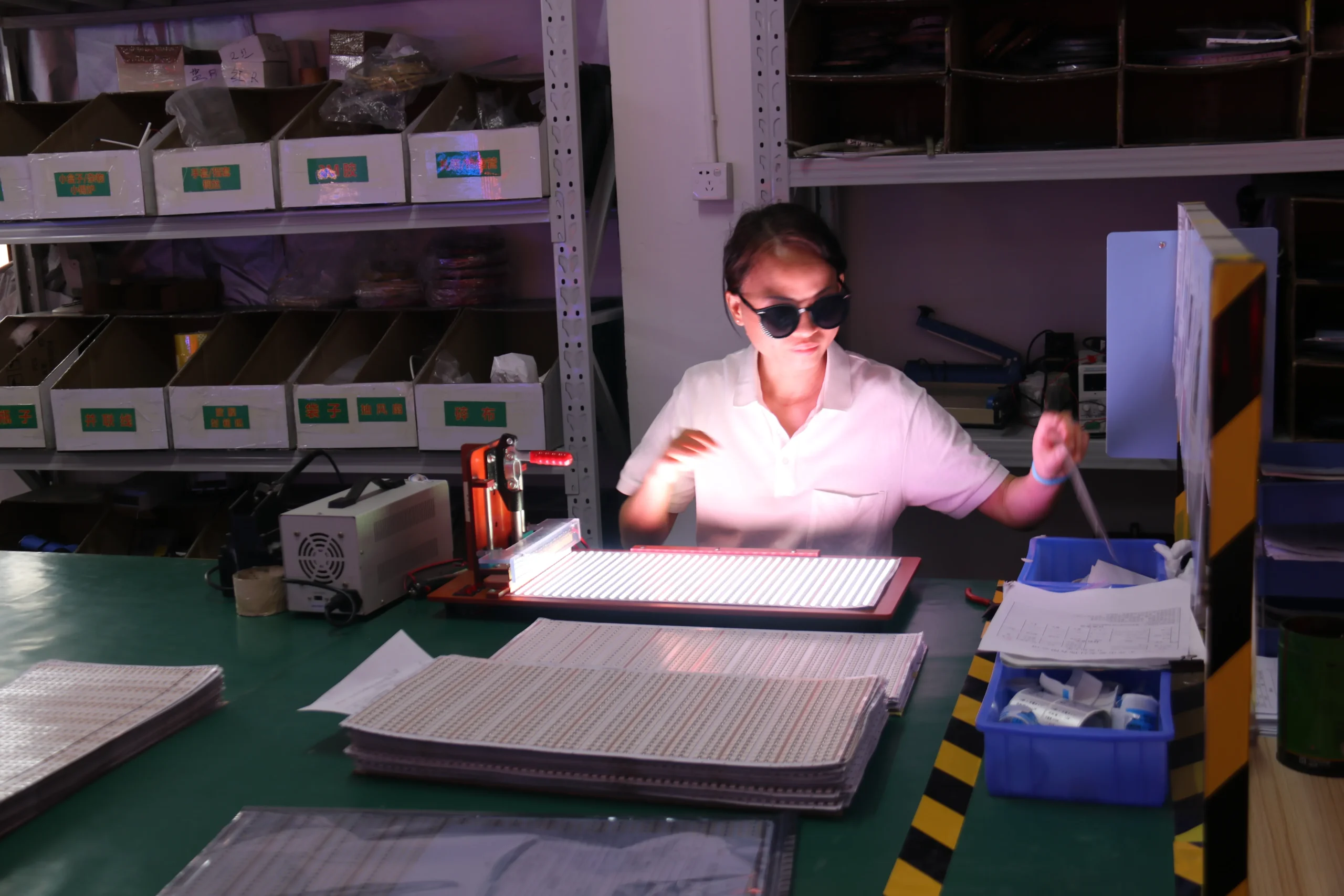
The first line of defense against dead or dim lights is not a statistical sampling audit — it is a 100% individual precision inspection of every LED bulb on every strip. Using a specialized testing machine, the light panel is precisely contacted and electrically energized. This apparatus simultaneously drives all LEDs to their rated operating current and optically scans each one.
The system’s camera and photometric sensors identify any LED that fails to illuminate, emits luminosity below the specified bin range, or exhibits color temperature deviation. The pass/fail criteria are strictly defined: any single dead bulb, any instance of visibly lower brightness (dim light), or any color shift outside the MacAdam 3-step ellipse triggers an immediate rejection of that panel. This stage eliminates the most common field failures — the annoying individual dark spots that ruin the appearance of installed cove lighting, under-cabinet runs, or architectural lines. Unlike human visual inspection, which can miss subtle differences due to fatigue, the machine-based precision inspection delivers consistent, repeatable judgments at production speed.
2. Contamination Scan: Detecting Poor Soldering and Micro Short Circuits
After confirming electrical and optical function, the strip enters a surface contamination detection phase. The production environment inevitably introduces fine dust, flux residues, solder splatter, and other particulates that can cling to the PCB and the LED solder pads. If these contaminants remain, they can mask latent defects that compromise long-term reliability.
Wilgex employs a cleaning and high-resolution optical scanning process that sweeps away surface dirt and residues, then inspects every solder joint with a magnified imaging system. This scan looks for:
Poor soldering: Insufficient solder, cold joints, skewed components, or incomplete wetting that may pass an initial electrical test but will fail under thermal cycling or mechanical vibration.
Micro short circuits: Tiny solder bridges or whiskers between adjacent pads that may cause intermittent failures, leakage current, or complete circuit shorts when the strip is flexed or twisted during installation.
Component misalignment: Resistors, ICs, or LEDs that are shifted or tilted, potentially affecting light emission uniformity and pad adhesion.
Any strip exhibiting these defects is either reworked in a controlled manner or scrapped entirely, depending on the severity. This proactive interception prevents the gradual degradation failures that frustrate end users — the strip that initially works but develops flickering segments after a few weeks of use.
3. Integrated Dimming Test: Smoothness Without Flicker or Lag
Modern LED strip installations frequently require smooth dimming integration with TRIAC, 0-10V, DALI, or PWM controllers. A strip that illuminates fully but exhibits flicker, audible buzz, or a coarse step response during dimming is unacceptable for residential and hospitality environments. Wilgex’s testing protocol incorporates an integrated dimming test that verifies the strip’s performance across its entire dimming range.
A calibrated dimmer control sweeps the brightness from 100% down to 1% (or the minimum specified level) and back up, while a high-speed photodiode sensor and flicker meter capture the light output. The acceptance criteria include:
Absence of visible flicker: Flicker percentage must remain below IEEE 1789 recommended limits for low-risk operation at all dimming levels.
Smooth, monotonic dimming curve: Brightness must transition progressively with no sudden jumps, dropouts, or hysteresis.
No audible noise: The strip and its power regulation electronics must remain silent regardless of the dimming duty cycle.
Strips that pass this test are guaranteed to deliver a premium, cinema-quality dimming experience, whether they are used in a home theater accent, a restaurant booth, or a museum display.
4. Professional Wire Soldering: Joint Integrity for Connection Reliability
Many LED strip failures in the field occur not in the strip itself, but at the connection points — the soldered joints where power leads or connectors attach. Wilgex does not rely on connector-press or clip-type terminations that can loosen over time. Instead, after a panel has passed the electrical and dimming verifications, qualified panels are soldered one by one with professional welding wire.
This manual yet skilled operation uses temperature-controlled soldering irons and high-quality lead-free solder with a flux core formulated for electronics use. Every solder joint is checked for:
Mechanical firmness: A gentle pull test ensures the wire cannot detach without breaking the conductor.
Smooth fillet: The solder joint should have a concave, shiny surface indicating proper wetting and minimal voids.
Strain relief: Adequate insulation coverage prevents copper wire breakage at the rigid solder joint due to repeated handling or thermal expansion.
By individually soldering and verifying every connection, Wilgex eliminates the intermittent contact and eventual wire breakage that plague cheap, mass-terminated light strips. This attention to detail is critical for installations where the strip must be shaped, routed around corners, and handled extensively — the joints remain solid.

5. Drop Impact Testing: Mechanical Robustness of Assemb led Strips
Once the strip is fully assembled with soldered connections, end caps, and mounting accessories, it faces a real-world mechanical stress test: drop impact testing. In a controlled procedure, the installed light strip is subjected to a series of drops from a specified height onto a hard surface, simulating the knocks and falls that can happen during transport, on-site handling, or installation.
After each impact event, the strip is powered on and checked for:
Normal illumination: No dead sections or dimming.
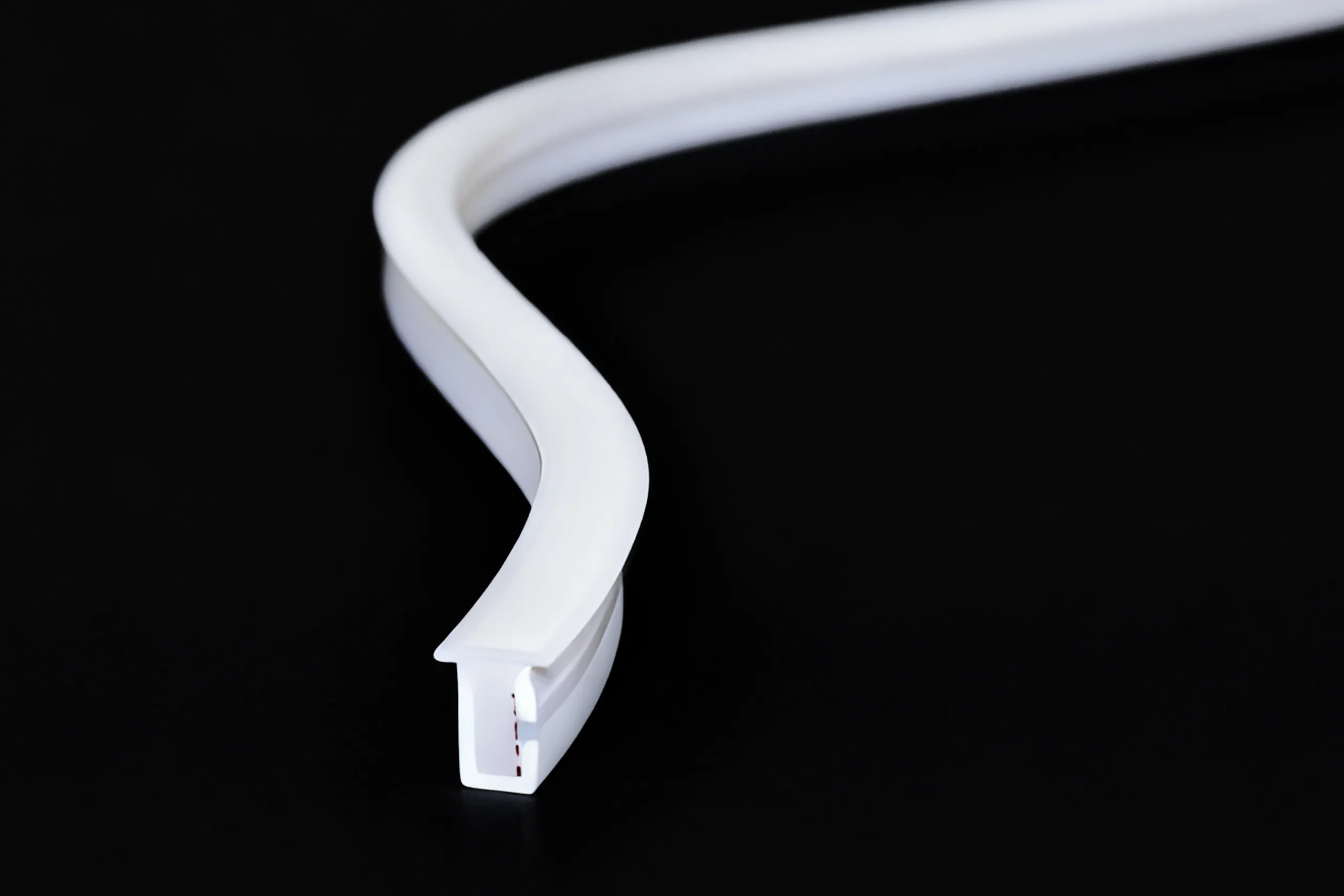
No structural damage: Silicone housing or PCB remains intact, without cracks or permanent deformation.
Solder joint integrity: No flickering when the strip is flexed near connection points, confirming that the soldered leads survived the shock.
The strip must light up normally without any sign of damage after the test series. This validation ensures that even if a packaged strip is mishandled by a courier or accidentally dropped on a construction site, the lighting performance will not be compromised. It is a final guarantee of resilience that gives installers confidence when working in fast-paced project environments.

6. Holistic Quality Commitment: Beyond Individual Tests
These inspection stages are not isolated checks; they form a cumulative quality filter. Data from each stage — rejection rates for dead LEDs, common soldering defects, dimming anomalies, impact failures — is fed back into the production and component procurement processes to drive continuous improvement. A spike in dead LEDs triggers an audit of the LED supplier; an increase in micro short circuits leads to adjustments in the reflow soldering profile; any dimming irregularity prompts a review of the constant current IC batch. This closed-loop system ensures that the testing itself becomes smarter over time.
Furthermore, every Wilgex LED strip is backed by a 5-year warranty on the LED beads and is built with a 3oz copper PCB and constant current ICs — but warranty is only meaningful if the product survives its early life. The rigorous testing protocol ensures that infant mortality failures are caught in the factory, not at the customer’s site, reducing costly callbacks and protecting Wilgex’s reputation among professional installers and end users.

7. Why This Testing Protocol Matters for Your Project
When you source LED strips for a high-end residential, commercial, or hospitality project, you are not buying just light — you are buying time, aesthetics, and peace of mind. A lighting installation that fails after completion demands expensive re-access, disassembly, and replacement, damaging budgets, schedules, and client relationships. Wilgex’s testing protocol, from single-bulb precision inspection to drop impact verification, is designed to eliminate these risks.
By the time a Wilgex strip light is packaged, it has proven its ability to:
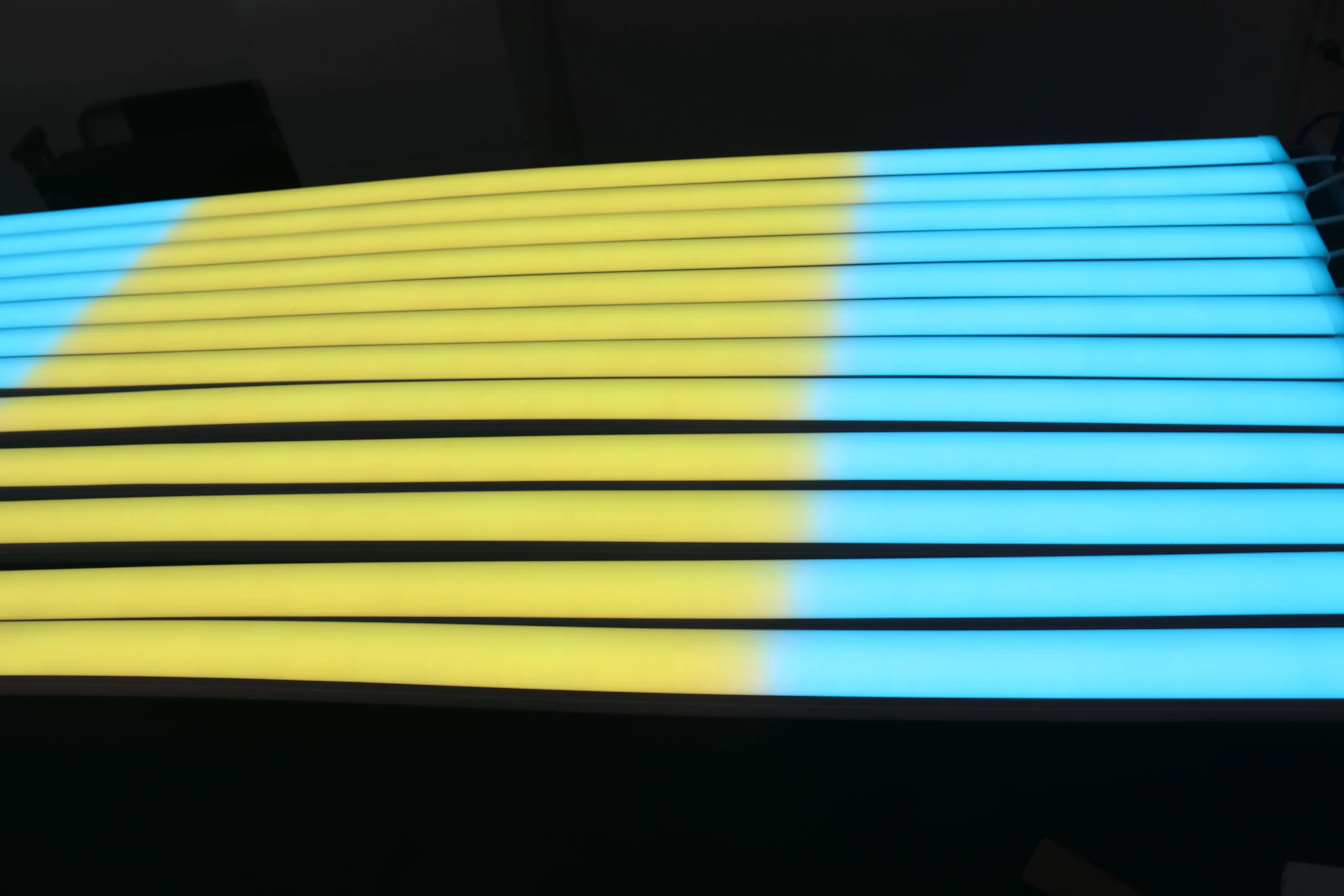
Light every single LED bead at full brightness
Maintain consistent color across its entire length
Dim smoothly without flicker, hum, or abrupt jumps
Endure physical shocks without breaking electrical continuity
Resist early degradation from hidden soldering flaws or contamination
This is the foundation of the Wilgex promise: strict testing that guarantees reliable quality and long service life, allowing lighting designers and contractors to specify with confidence.
Experience the Wilgex Quality Difference
Quality is not an accident — it is a result of intelligent, persistent, and thorough effort applied at every inspection point. We invite you to explore the full range of Wilgex LED strip products, each manufactured and tested to the exacting standards described here.