










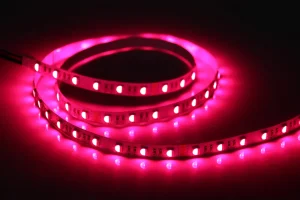
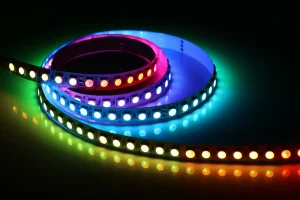
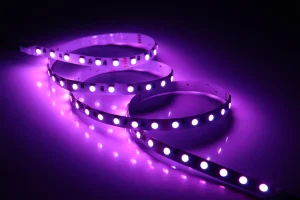
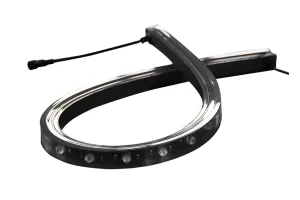
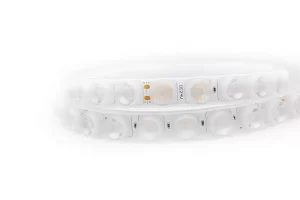


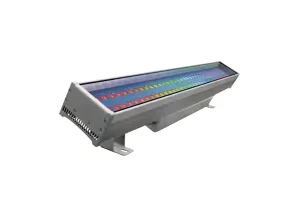
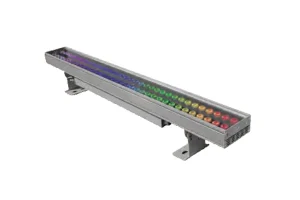
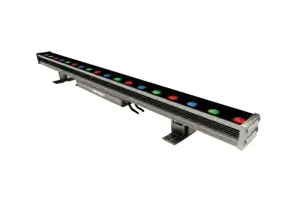
















The interplay between architecture and light has transcended traditional functional boundaries, evolving into an artistic language that reshapes spatial perception and revitalizes urban energy. In contemporary commercial architecture, an experimental design concept termed the “second skin of light” is emerging—a seamless integration of LED strip lights and advanced lighting systems with building envelopes, where light transitions from a mere accessory to a dynamic, living second layer of the structure itself.

I. The Topology of Light: From Decoration to Structural Language
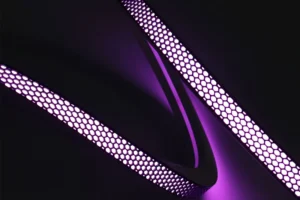
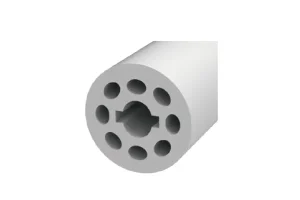
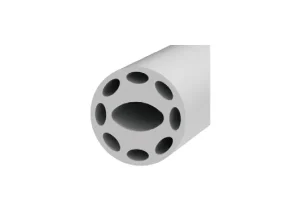
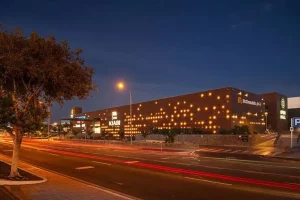
In the context of open-air retail complexes, lighting design redefines the essence of façades. Architects employed circular geometry as a foundational motif, perforating the outer cladding with randomly distributed micro-apertures embedded with flexible LED strip lights for indirect illumination. This seemingly chaotic matrix is meticulously engineered through optical calculations:
-
Dual Narrative of Day and Night: Under daylight, the perforated array casts intricate shadow patterns, creating a textured bas-relief effect. At night, high-density LED strip lights concealed within the cladding project light through the apertures, transforming the façade into a three-dimensional sculpture of suspended light particles with depth and volume.
-
Dynamic Light Sequencing: Preprogrammed warm-light gradients, powered by tunable RGBW LED strip lights, simulate celestial phenomena like a “solar eclipse,” where luminous orbs drift, overlap, and fade rhythmically. This transforms static architecture into a kinetic installation that engages with temporal rhythms.
Beyond visual spectacle, this strategy reconfigures the behavioral appeal of commercial spaces: surveys indicate that 63% of visitors cite dynamic lighting as a key motivator for engagement, proving that intelligent LED strip systems now serve as invisible drivers of consumer behavior.
II. Sustainable Syntax: A Technological Revolution in Eco-Conscious Design
With lighting accounting for 35% of global building energy consumption, the “second skin” project demonstrates how aesthetics and sustainability coexist through three innovations:
1. Intelligent Light Ecosystem
-
Light and motion sensors paired with dimming-capable LED strip lights adjust brightness based on ambient conditions and foot traffic, achieving 58% energy savings compared to conventional systems.
-
Zoned control ensures “light-on-demand,” maintaining only contour lighting during non-operational hours.
2. Ecological Sensitivity
-
2700K–3000K warm-color LED strip lights minimize blue-light emissions to protect nocturnal ecosystems.
-
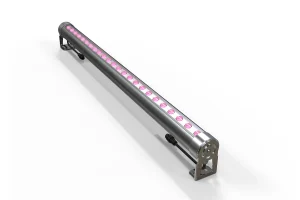
Honeycomb baffles and precision optics for outdoor-rated LED strips restrict beam angles to 60°, eliminating light pollution spillage.
3. Modular Longevity
-
Hot-swappable LED strip modules reduce maintenance costs by 70%, ensuring rapid replacements without disrupting architectural continuity.
-
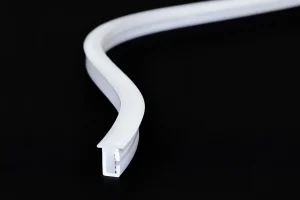
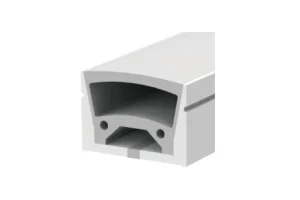
Recyclable aluminum alloy cladding, combined with IP67-rated silicone LED strips, allows pattern reconfiguration without structural compromise.
III. Experience Engineering: Lighting as a Behavioral Catalyst
In an era where e-commerce challenges physical retail, the “second skin” reimagines commercial spaces through multisensory engagement:
1. Spatial Dimension Interplay
-
Micro-scale LED strip lights (8–12mm apertures) at human height foster intimacy through localized glow.
-
Wide-beam LED strips (30–50mm apertures) at heights above 20m create celestial “starry canopy” effects.
2. Behavioral Guidance Through Light Syntax
-
Programmable LED strip arrays at entrances accelerate light sequences to signal energetic transitions.
-
Slow breathing rhythms in lounges, achieved via addressable LED strips, pair with tunable color temperatures (4000K daytime alertness to 2700K evening relaxation) to modulate user states.
3. Climate-Responsive Interaction
-
“Light rain” modes, powered by waterproof LED strip systems, generate rippling effects during precipitation.
-
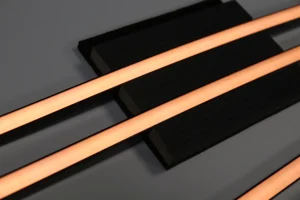
Winter dusk triggers amber-hued “hearthlight” simulations using warm-white LED strips for psychological warmth.
IV. Future Horizons: The Photonic Evolution of Architecture
This project foreshadows a paradigm shift—lighting transitioning from additive to inherently architectural:
-
Photon-Integrated Materials: Next-gen cladding may embed LED strip lights or micron-scale optical fibers for “breathing” light-diffusive surfaces.
-
Self-Sufficient Energy Systems: Solar-active façades with photovoltaic-integrated LED strips could harvest daylight for nocturnal illumination.
-
AI-Driven Emotional Analytics: Real-time mood detection via facial recognition might dynamically calibrate smart LED strip parameters for empathetic environments.
Conclusion: Light as Architectural Epigenetics
When light becomes an inseparable “skin” of architecture—embodied in innovations like adaptive LED strip lighting—its role surpasses mere illumination. It emerges as a spatial mood modulator, a catalyst for nocturnal economies, and a new dialect in human-architecture dialogue. At the intersection of technology and humanity, we witness a silent revolution—each photon redefining architectural vitality, each shadow scripting the poetry of future cities.


