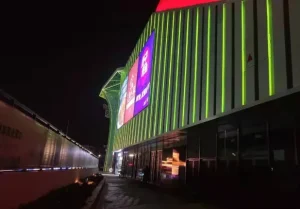
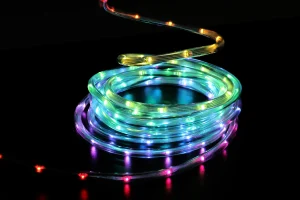


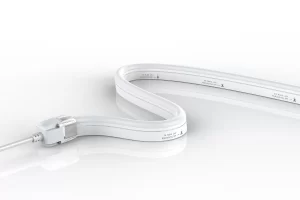
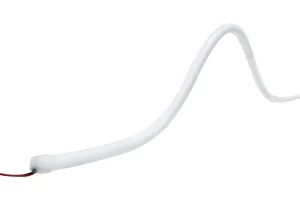

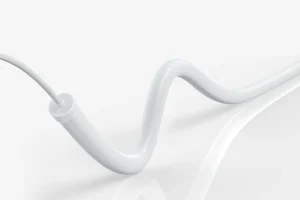
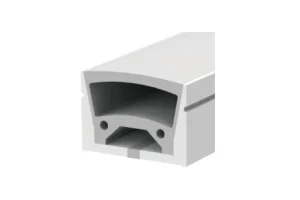
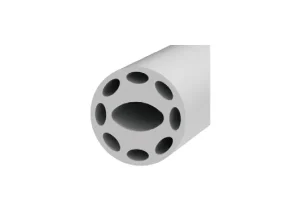
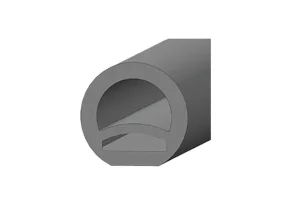
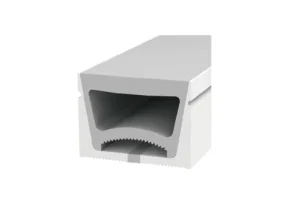
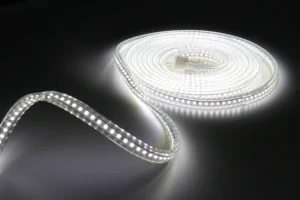


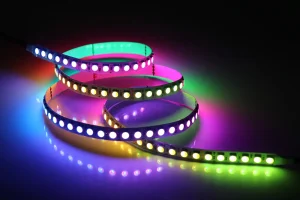
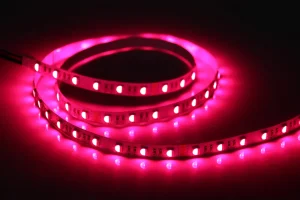
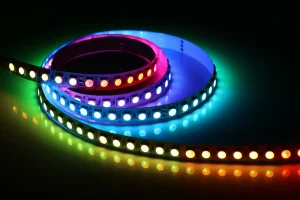
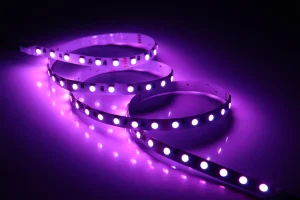
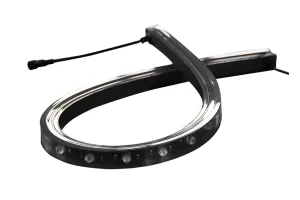
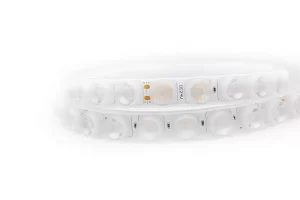
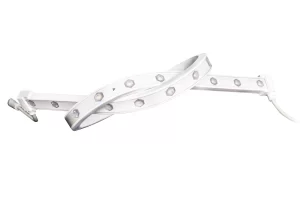
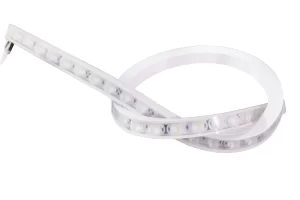
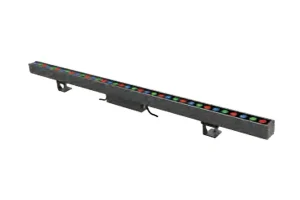


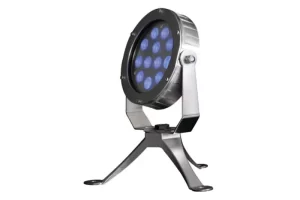
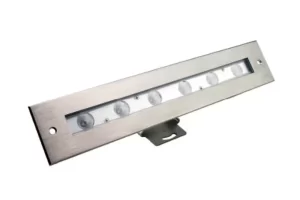
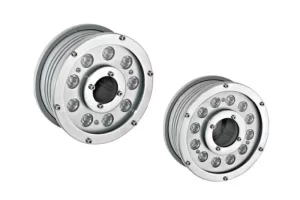


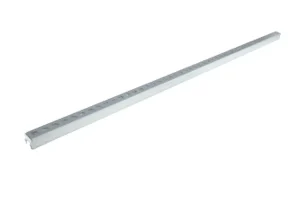
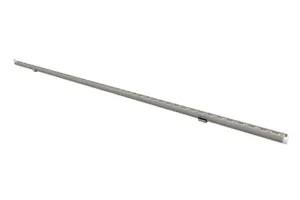


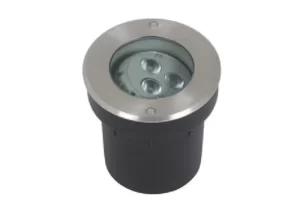


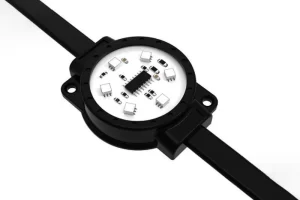




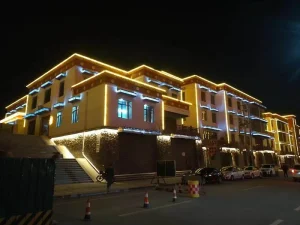
In outdoor lighting projects such as building facades and landscape lighting, silicone neon light strips are highly favored for their soft light and flexible shaping. However, many projects soon reveal various issues after implementation, which not only affect the longevity of the lighting effects but also lead to high maintenance costs and safety risks.
To create truly stable and long-lasting high-quality lighting projects, it is essential to systematically address the following four core pain points. This article will delve into the causes of these issues and provide systematic solutions based on advanced materials and innovative designs.
Pain Point 1: Inadequate Weather Resistance—How to Withstand Harsh Natural Environments?
Outdoor environments are unpredictable, from UV exposure to rain, snow, and frost, all of which pose extreme challenges to the stability of light strip materials.
Specific Manifestations and Solutions:
-
Failure and Reduced Lifespan Under Extreme Temperatures
-
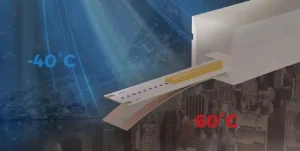
Description: In extremely cold regions (e.g., -40°C), the electrolytic capacitors of conventional light strips can freeze and fail, while materials become brittle and crack. In high-temperature environments (e.g., above 50°C), overheating of the power supply and light body can lead to accelerated light decay or even combustion risks, severely limiting the product’s applicability in certain regions.
-
Solution: Adopt a wide-temperature-range design. For instance, light strips utilizing flip-chip (COB) technology can extend the operating temperature range of core components to -40°C to +80°C, ensuring stable performance in most extreme climates. Additionally, using silicone encapsulation and electronic components resistant to extreme temperatures enhances the product’s durability from the inside out.
-
-
Chronic Yellowing Due to Long-Term UV Exposure
-
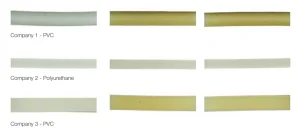
Description: After several years of outdoor use, conventional light strips often visibly yellow and become cloudy, resulting in reduced light transmittance. The originally pure white light turns dull, and vibrant colors fade, severely compromising the building’s aesthetics.
-
Solution: Upgrade to weather-resistant, UV-resistant silicone materials. Through seamless extrusion molding and the uniform incorporation of UV-resistant nanoparticles, the product can undergo rigorous artificial aging tests (e.g., 3000 hours of UV exposure, equivalent to approximately 9 years outdoors) with a color difference ΔE controlled to <1.5, which is nearly imperceptible to the naked eye. This ensures long-lasting luminous effects and visual clarity.
-
-
Structural Cracking Induced by Thermal Expansion and Contraction
-
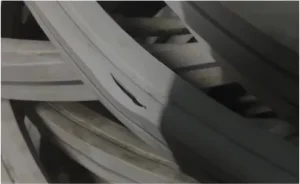
Description: Cracking or fracturing occurs at stress concentration points such as joints and corners due to cyclic temperature changes, directly compromising the waterproof structure and allowing rainwater infiltration, which can cause short circuits.
-
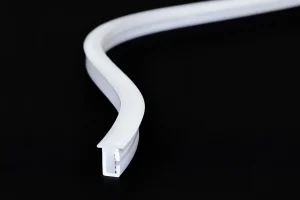
Solution: Use highly elastic, tear-resistant silicone materials combined with innovative triple-extrusion and patented T-shaped window structures. This design reinforces connection points like traditional joinery, effectively dispersing and absorbing thermal stress, thereby preventing cracking at seams and ensuring overall structural resilience and stability under thermal shock.
-
Pain Point 2: Long-Term Reliability—How to Ensure Sustained Stable Operation?
Specific Manifestations and Solutions:
-
Failure of Water and Moisture Resistance
-
Description: Inadequate IP protection due to traditional potting processes or poor structural sealing allows moisture ingress during prolonged rain or humid conditions, leading to circuit corrosion and LED damage.
-
Solution: Achieve seamless, integrated encapsulation to ensure the light strip body meets a high protection rating of IP67 or above. For connection points, use patented anti-seepage structures and professional waterproof connectors to provide protection equivalent to the light strip body, eliminating any risk of water seepage.
-
-
Weak Mechanical Strength and Impact Resistance
-
Description: The light strip is susceptible to damage from accidental stepping or impact by foreign objects during installation or subsequent maintenance.
-
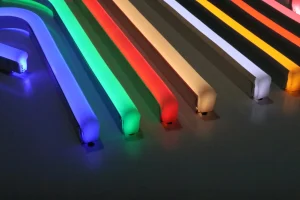
Solution: Thanks to high-strength silicone materials and a rational internal structural design, high-quality outdoor neon light strips exhibit excellent compression, tensile, and impact resistance, capable of withstanding certain external forces and ensuring physical safety in complex environments.
-
Pain Point 3: Light Output Issues—How to Achieve the Perfect Desired Lighting Effect?
Specific Manifestations and Solutions:
-
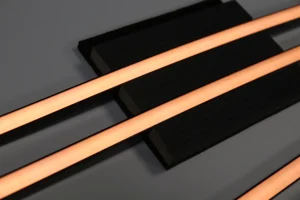
Description: Uneven light output, dark zones, or a “grainy” appearance, where the light is not soft and continuous, failing to achieve the pure linear lighting effect envisioned by the designer.
-
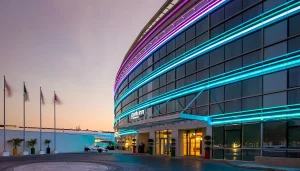
Solution: Employ optical-grade light-diffusing materials and scientific light-mixing structural designs. Through precision light guide channels or diffusion layers, LED point light sources are fully blended to emit continuous, uniform, and flicker-free soft light, reminiscent of traditional glass neon lights, perfectly realizing the design vision.
Pain Point 4: Control System Failures—How to Ensure Signal Stability in Complex Systems?
Specific Manifestations and Solutions:
-
Description: In large DMX512 control systems, long signal transmission distances are prone to interference, resulting in flickering, desynchronization, or loss of control.
-
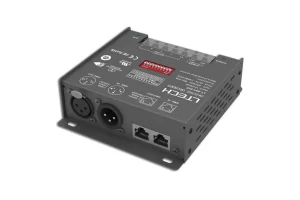
Solution: Build a professional control system architecture. This includes: using shielded twisted-pair signal cables and routing them separately from high-voltage power lines; installing 120Ω terminating resistors at the end of the signal chain to eliminate signal reflection; setting independent starting addresses for each light strip section; and providing stable power and proper grounding for control system devices.
Conclusion:
A successful outdoor lighting project stems from precise control over every detail. By selecting products that offer systematic solutions across the four key dimensions of weather resistance, reliability, light quality, and control, one can bridge the gap from “short-term effect” to “long-term quality,” creating truly enduring and captivating high-end lighting masterpieces.