





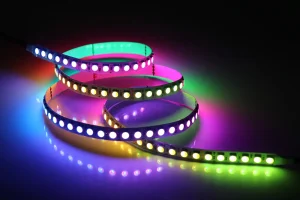
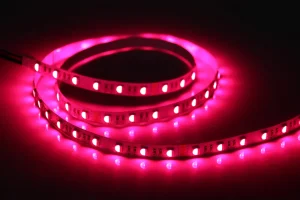
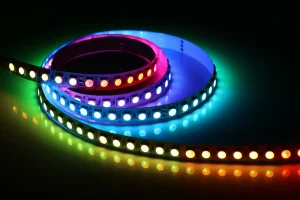
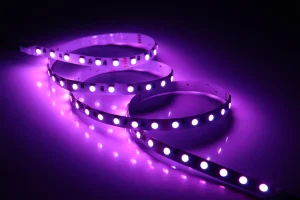
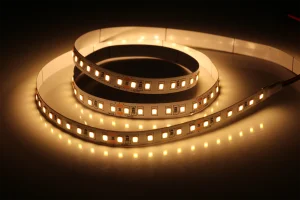















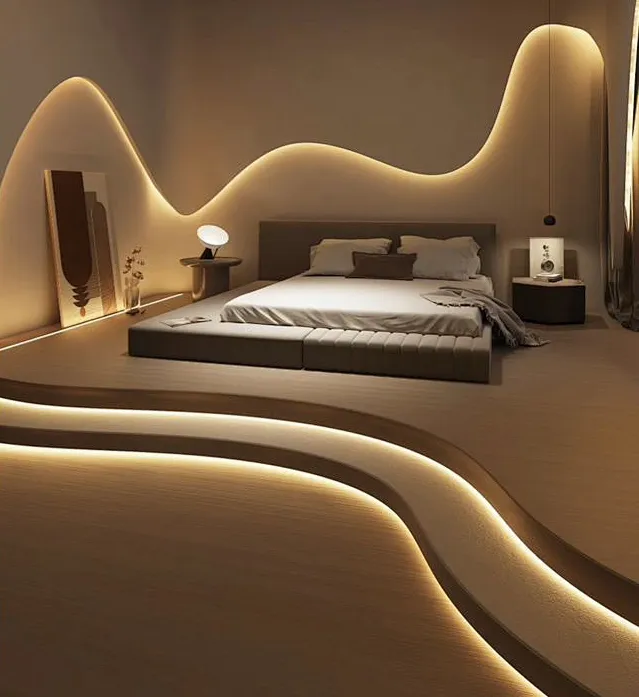
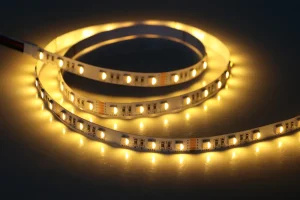
LED strip lights are widely used for home, commercial, and decorative lighting. With a variety of options available, understanding the basic components and key factors when selecting LED strips is essential. This article will help you quickly grasp the fundamental knowledge for choosing the right LED strip lights.
Basic Components of LED Strips
An LED strip is made up of several key components, including LED chips, circuit boards, resistors, and adhesive backing. Each of these elements affects the performance, lifespan, and lighting quality of the strip.
- LED Chips
LED chips are the light-emitting units in an LED strip and are critical to its performance. Common types include:
- 120 LEDs: 120 LEDs per meter of strip.
- High-density types: 240, 280 LEDs per meter for higher light output and density.
Key parameters for LED chips include:
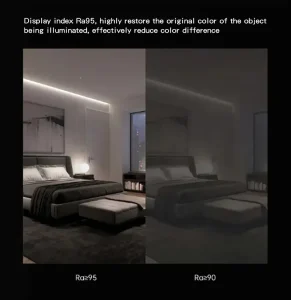
- Color Rendering Index (CRI): CRI indicates the ability of a light source to render colors accurately. The higher the CRI, the more vibrant and true-to-life the colors will appear under the light.
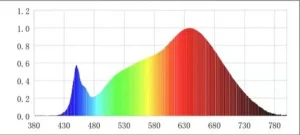
- Blue Light Emission: Blue light can be harmful to the eyes, and it is important to choose strips with low blue light emission to protect eye health.
- SDCM (Standard Deviation Color Matching): This refers to the consistency of the color temperature of the light. A smaller SDCM value means better consistency and uniformity in color temperature.
- Circuit Board
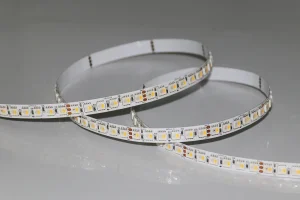
The circuit board is the backbone of the LED strip. Common types include:
- Electroplated Board: With an added copper layer, electroplated boards have better conductivity and performance, ideal for high-quality strips.
- Cup Hole Board: This type is designed with additional holes to improve efficiency and is better for more demanding applications.
- Die-cut Board: Typically used for mass production due to its cost-effectiveness, but performance is generally lower compared to electroplated boards.
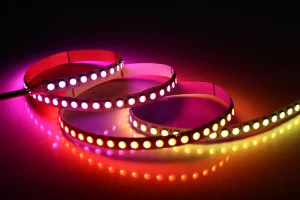
- Adhesive Backing
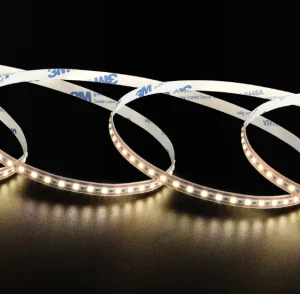
The adhesive backing is what allows the LED strip to be easily installed and fixed in place. The highest quality adhesive backing comes from 3M, known for its superior adhesion and durability. However, 3M adhesive is relatively expensive. To differentiate between genuine and counterfeit products, you can check the color of the adhesive backing. Authentic 3M adhesive usually has a blue base or brown base with blue, while counterfeit products may have a different color.
- Resistors
Resistors regulate the current flow in the LED strip to ensure it operates correctly. The difference in resistors is usually not very significant, so there’s no need for extensive differentiation when selecting LED strips.
How to Choose the Right LED Strip?
When selecting an LED strip, focus on the following aspects:
- LED Chips’ Quality and Parameters: Look for strips with a high CRI, low blue light emission, and a low SDCM value for better lighting quality and eye protection.
- Circuit Board Quality: Opt for electroplated boards, as they provide better conductivity and durability.
- Adhesive Backing Quality: Choose LED strips with genuine 3M adhesive for stronger and longer-lasting adhesion.
- Resistor Quality: Generally, resistors are less important in selection as their differences are not as pronounced.
Conclusion
By understanding the basic components and key parameters of LED strips, you can more easily choose the right one for your needs. Whether you’re looking for better lighting quality, durability, or eye safety, knowing what to prioritize will help you select a high-quality LED strip that meets your requirements.


