








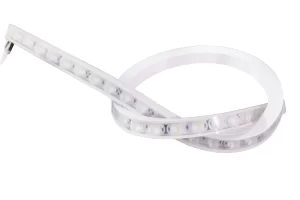
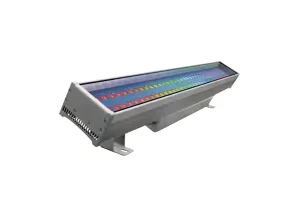
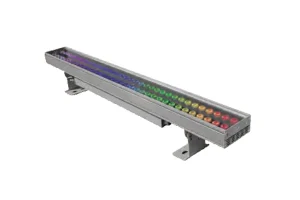
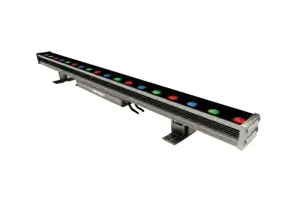
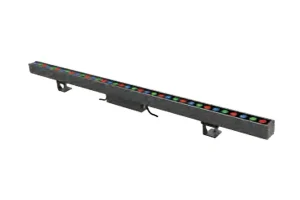


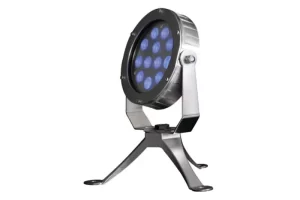
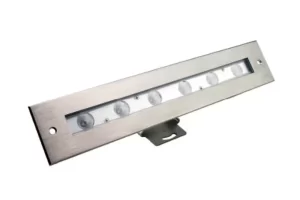
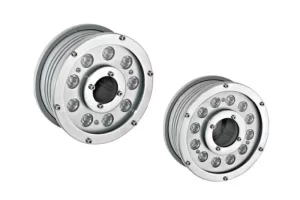


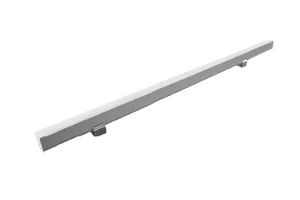
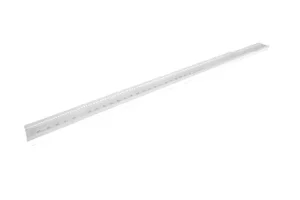
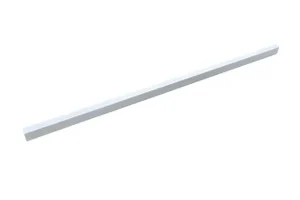
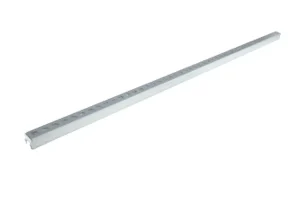
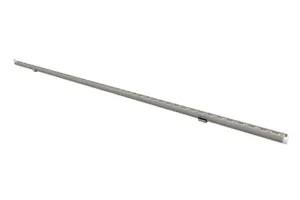


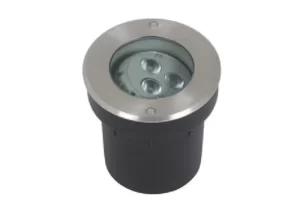


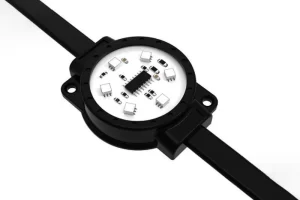


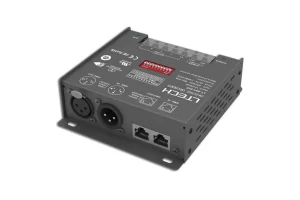


I. LED wall washers Definition and Technological Evolution
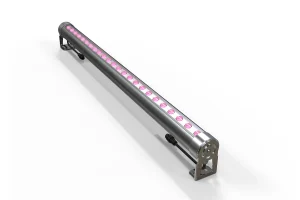
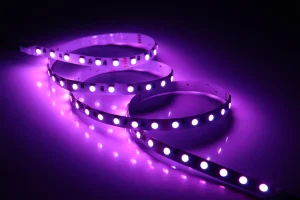
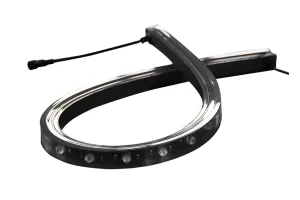
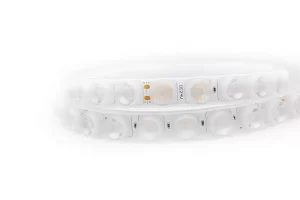
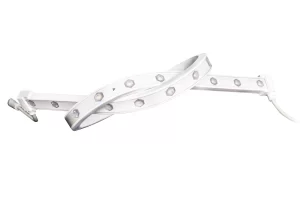
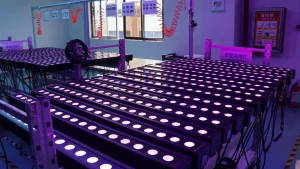
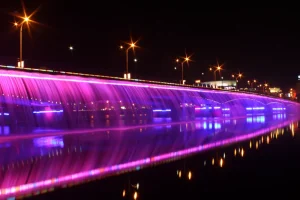
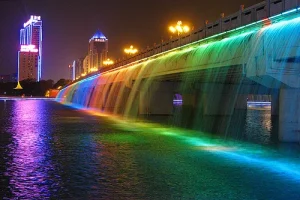
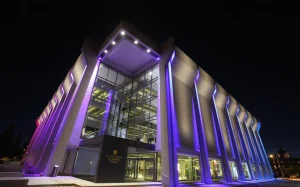
LED wall washers, named for their ability to create a “water-like” light flow on building surfaces, have revolutionized architectural lighting. Since transitioning fully to LED technology in 2013, the product has undergone significant advancements:
-
Light Source Evolution
-
Traditional Era (2000–2012): Relied on metal halide and fluorescent lamps with high energy consumption (80–150W), low color rendering (Ra <70), and limited dimming capabilities.
-
LED Breakthrough (2013–2018): Adoption of COB packaging enabled single-lamp power to exceed 100W, efficiency to reach 120 lm/W, and integration of DMX512 digital control.
-
Smart Lighting Era (2019–Present): Incorporates IoT modules, 5G+AIoT connectivity, and dynamic scene programming.
-
-
Structural Innovations
-
Early designs were limited to 1m lengths due to thermal constraints.
-
Nano-cast aluminum cooling allowed 3m single-unit designs (36W/m).
-
Modular systems now enable seamless extensions for large-scale facades.
-
II. LED wall washers Core Technical Specifications
-
Optoelectronic Performance
-
Power Density: 18W/m (basic) → 48W/m (high-brightness) → 72W/m (specialized).
-
Color Gamut: Supports 120% NTSC with RGBCW 5-channel mixing.
-
Beam Angle Control: Aspheric secondary optics offer 15°/30°/45°/60° adjustability.
-
-
Electrical Safety
-
Smart Drivers: ±1% current precision, PF >0.98, 0-10V/PWM/DALI compatibility.
-
Robust Protection: IP68 (1m submersion) + IK10 impact resistance.
-
Emergency Backup: Built-in supercapacitors for 30-min safety lighting.
-
-
Thermal Management
-
3D Cooling: Heat pipes + graphene + liquid cooling.
-
Adaptive Control: NTC sensors dynamically adjust output.
-
Material Science: 6063-T5 aluminum alloy (220W/m·K conductivity).

-
III. LED wall washers Structural Design and Manufacturing
-
Optical Systems
-
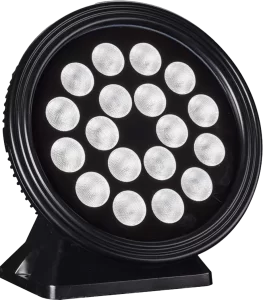
Micro-prism light guides with 0.5mm diamond-cut precision.
-
Nano-coating for 98.5% transmittance and UV resistance.
-
Optional motorized zoom mechanisms.
-
-
Mechanical Advancements
-
Quick-mount brackets (±15° adjustment).
-
Self-cleaning TiO₂ photocatalytic coating.
-
MIL-STD-810G vibration resistance certification.
-
IV. LED wall washers Quality Assurance Systems
-
Reliability Testing
-
Accelerated aging: 3,000 hours at 85°C/85% RH.
-
L70 lifespan: 50,000 hours (TM-21 standard).
-
Extreme tests: -40°C to +60°C thermal shock.
-
-
Smart Production
-
Automated SMT assembly with LED binning.
-
Integrating sphere spectral calibration.
-
3D scanning for ±0.1mm tolerance control.
-
V. LED wall washers Intelligent Control Systems
-
Communication Protocols
-
Wired: DMX512/ArtNet/sACN.
-
Wireless: ZigBee 3.0/Bluetooth Mesh/LoRa.
-
Cloud platforms: Alibaba Cloud/Huawei Cloud/AWS IoT.
-
-
Application Scenarios
-
Media facades: 4K pixel-level control (per-fixture addressing).
-
Environmental adaptation: Weather-linked brightness adjustment.
-
Energy monitoring: Real-time per-fixture efficiency tracking.
-
VI.LED wall washers Industry Applications and Trends
-
Emerging Uses
-
Smart cities: Vehicle-to-infrastructure guidance.
-
Digital twins: BIM-integrated virtual commissioning.
-
Solar integration: Flexible PV film compatibility.
-
-
Technological Trends
-
Miniaturization: 3cm ultra-slim profile (3,000 lm/m).
-
Transparency: 80% light-transmissive stealth designs.
-
Self-powering: Vibration energy harvesting.
-
-
Sustainability
-
Circular manufacturing: 95% recyclable materials.
-
Low-carbon processes: Carbon footprint tracking.
-
Dark Sky compliance: Glare-free optics.
-
Conclusion
As smart cities and digital architecture evolve, LED wall washers have transformed from decorative tools into integrated systems merging photonics, IoT, and renewable energy. Future advancements will prioritize modularization, networking, and sustainability, balancing aesthetics with intelligent environmental interaction. Emerging standards like IEEE P2048.1 for smart lighting will further shape innovation, ensuring these fixtures remain pivotal in redefining urban nightscapes.