


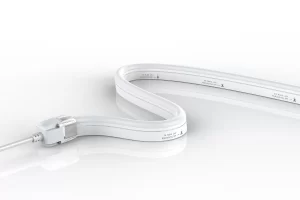
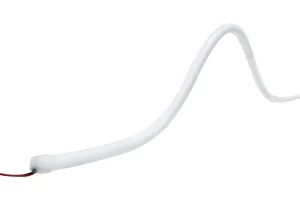

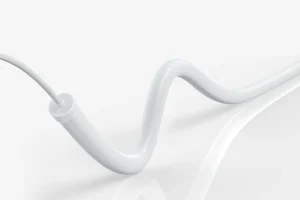


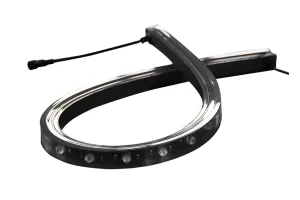
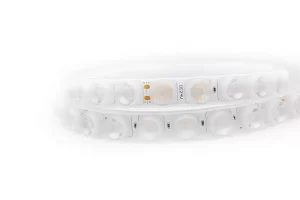
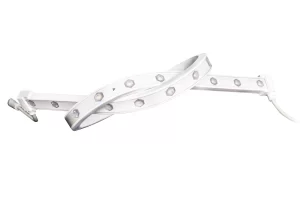
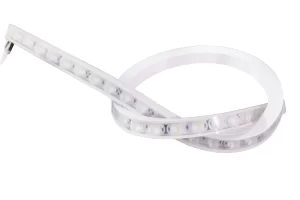
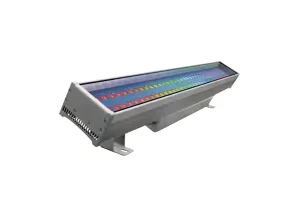
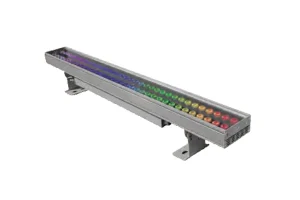
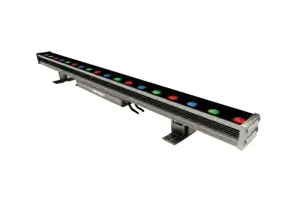
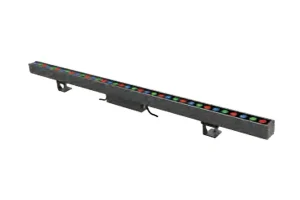




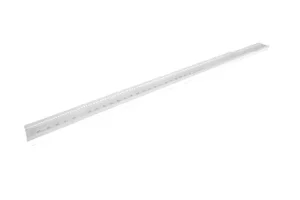
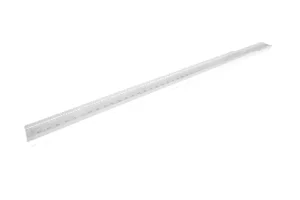
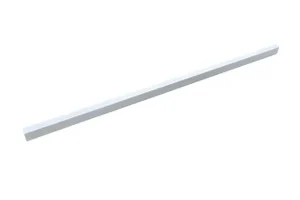
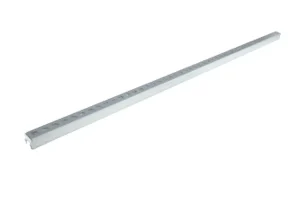








In architectural facade lighting, Outdoor LED Strip Lights,waterproof LED strips, silicone neon LED strips, linear wall washer lights, and DMX dynamic running lights are widely used. While the effects are undeniably beautiful, various problems arise during actual project implementation—some yellow and crack after only a year or two, some fail during installation due to dead bulbs or broken panels, and some dynamic effects are unwatchable due to poor responsiveness. These issues ultimately affect project quality, lifespan, and maintenance costs. In summary, these problems boil down to four dimensions: weather resistance, long-term reliability, light output effect, and control and compatibility. Let’s discuss them one by one.
Weather Resistance: The First Hurdle for Outdoor LED Strip Lights
Extreme Temperatures Cannot Withstand
Conventional products struggle to function properly below -20°C or above 50°C. At -40°C, electrolytic capacitors in ordinary lighting fixtures freeze and fail; at 80°C, power supplies may overheat or even spontaneously combust. Mismatched coefficients of thermal expansion and contraction in materials can also cause structural fractures. Therefore, they are often avoided in extremely cold and tropical regions.
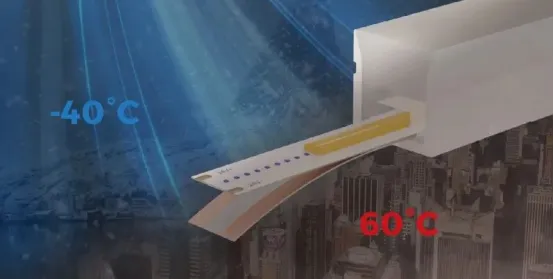
The reason is simple: the temperature resistance range of the light source, colloid, PCB, and electronic components is insufficient.
Wilgex employs inverted light source technology, allowing it to operate at temperatures between -40°C and 60°C. Combined with extreme-temperature resistant silicone and electronic components, it remains stable in both hot and cold environments.
Yellowing Over Time
Outdoor LED strips tend to yellow and fog under the influence of UV rays, ozone, and high temperatures, resulting in decreased light transmittance and a warmer, darker color temperature. They look nice initially, but become “old” after a year.
Traditional PVC materials have poor weather resistance and weak UV aging resistance; even silicone will yellow without UV inhibitors.
Wilgex uses specialized weather-resistant silicone, extruded in one piece, with 3% UV-resistant nanoparticles added. After 3000 hours of UV testing (equivalent to about nine years outdoors), the color difference ΔE is less than 1.5, with virtually no noticeable yellowing, and light transmittance and visual effect are maintained long-term.
Cracking and Water Leakage
LED strips are prone to cracking at joints, corners, or stress concentration points due to repeated thermal expansion and contraction and material aging. Not only is it unsightly, but the more troublesome issue is waterproofing failure. Moisture ingress leads to short circuits, corrosion, and even lamp failure.
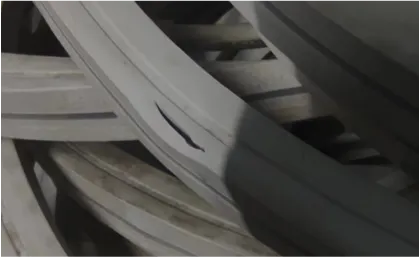
Conventional silicone sealants have poor elasticity and weak tear resistance, hardening and becoming brittle at low temperatures. Combined with poor structural design, stress at the joints cannot be released, making them prone to cracking.
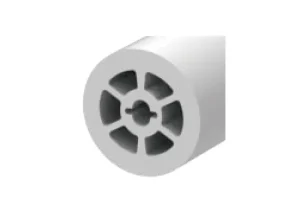
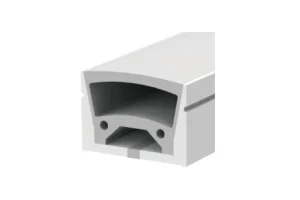
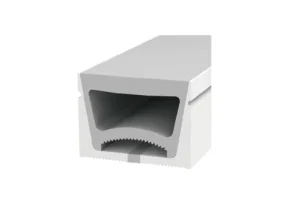
Wilgex uses weather-resistant silicone for the main body, combined with a three-color co-extrusion process and a patented T-shaped window design. The joints are specifically reinforced, improving overall toughness and thermal shock resistance.
Water Ingress and Siphon Effect
Water ingress is one of the most common causes of failure in outdoor lighting fixtures. Poor plug sealing and insufficient waterproof rating allow water to seep in along the cable or interface. A more insidious issue is the siphon effect, where negative pressure forms inside the cable, gradually drawing moisture into the lamp body.
The root cause is usually poor plug manufacturing, such as using glue for bonding; or interfaces only achieving IP44 or IP54 ratings, which cannot withstand long-term immersion or water pressure.
Wilgex uses an IP67 one-piece molded plug, providing a complete seal. The connector features a double-layer waterproof structure internally, with an inner waterproof layer and a molded seal, effectively preventing water ingress into the cable due to siphoning.
Long-Term Reliability: The True Test is After Installation
Die LEDs: During transportation, installation, and operation, individual LEDs may fail, creating black spots or dark areas, significantly affecting the appearance.
The solder joints and structure of standard LEDs are relatively brittle, with poor resistance to impact and vibration; even slight rough handling during installation can cause damage.
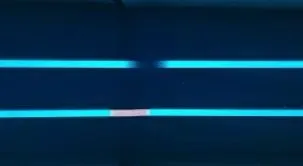
Wilgex’s 3D flexible neon light strips exhibit significantly better resistance to die LEDs, boasting superior mechanical properties. They have undergone a 720° x 5000-cycle extreme torsion test and remain reliable.
Single LED Failure Causes Entire Section to Go Black
In traditional series circuits, the failure of one LED extinguishes the entire smallest shear unit, creating a glaring black spot. This is especially noticeable from a distance.
This is the nature of series design; a single point of failure opens the circuit.
Wilgex uses a multi-core parallel power supply scheme. The failure of a single light source only affects that one LED; other light sources within the same shear unit continue to function normally. The black spots become very small; they appear slightly flawed up close, but are virtually imperceptible from a distance, greatly reducing the visual impact.
PCB Breakage
Bending, pulling, or aging during installation can cause the PCB to break at a non-shear point, resulting in a long section of the light going completely dark, and it’s difficult to repair.
Insufficient PCB material toughness and improper wiring leading to stress concentration, combined with excessive bending during installation, make it prone to breakage.
Wilgex’s backplane uses a dual-power supply design. Even if the light board breaks in the middle, the section after the break can continue to operate through the backup circuit, preventing a complete blackout.
Wire Breakage
During installation, wiring, and later maintenance, power or signal cables can be pulled, transmitting force to fragile solder joints or PCB traces inside the light body, causing desoldering and open circuits. This can result in localized failure or, in severe cases, the entire line going dark.
Lack of tensile strength protection between the plug and the light/cable connection, and improper cable fixing methods.**
Wilgex’s plugs feature an anti-pull structure that absorbs tension transmitted to the plug and wire connection, preventing direct force on the internal PCB. The plugs have undergone a 650N pull test, far exceeding actual usage load.
Light Emission Effect: Aesthetic Comfort is Key
Inconsistent Color Temperature Between Batch
Different batches of the same model may exhibit color temperature deviations after installation, some leaning towards red, others towards blue. This is particularly noticeable in large-area continuous installations, resulting in an uncoordinated overall lighting effect.
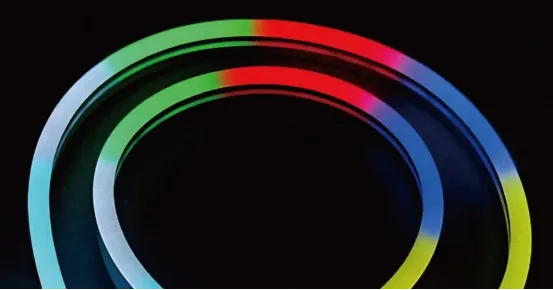
Differences in LED phosphor ratios can cause color temperature drift; slight variations in silicone formula between different batches can also amplify color differences throughout the light strip.
Wilgex sources light sources according to the ANSI standard color system. Bulk orders undergo a 5-step color difference control process (the standard is 8 steps). Color temperature consistency between different batches of the same model is extremely high, and mixing them is virtually imperceptible.
Uneven Light Emission
The brightness of the light strip differs between the edges and center, resulting in poor overall uniformity and an uncomfortable, glaring appearance.
LEDs are point light sources. An improperly designed light guide structure in the silicone light body prevents even light diffusion.
Wilgex employs a high-transmittance silicone extrusion structure, optimizing the light source layout and incorporating a uniform light layer and scattering microstructure. This softens the light, significantly improving the uniformity of the light-emitting surface and virtually eliminating edge dark areas.
Dynamic Effect Stuttering
When performing gradient or chasing effects with RGB LED strips, stuttering, jumps, or asynchrony completely ruin the texture of high-end dynamic scenes.
Insufficient RGB IC performance, low grayscale, slow refresh rate; poor compatibility between driver chips and control systems; unstable signal transmission or limited protocols.
Wilgex has upgraded its high-performance RGB IC, supporting 16-bit processing and optimizing the signal transmission circuitry, resulting in very smooth color transitions. It also boasts good compatibility, supporting mainstream international control systems such as Art-Net, sACN, and PixLite, allowing for precise and smooth control.
Low Energy Efficiency
Low luminous efficacy of the luminaire itself necessitates increasing current or density to achieve the designed brightness, leading to a surge in overall system power consumption, high operating costs, and environmental impact.
Poor LED luminous efficacy, low optical structure efficiency (silicone transmittance, reflection efficiency), and low driver power supply efficiency are all possible causes. Wilgex utilizes a high-transmittance silicone structure and optimized optical design, resulting in improved overall lighting efficiency and significantly reduced power consumption at the same brightness. Data shows up to 40% energy savings, saving both money and reducing carbon emissions.
Control and Compatibility: Don’t Let the System Get Stuck at the Last Step
Poor Compatibility
Protocol incompatibility between the lighting fixture and the user’s chosen mainstream control system (DALI, DMX512, etc.) or third-party devices (sensors) leads to either inability to drive the light or unstable control.
The receiving driver IC has a narrow protocol compatibility range or does not strictly adhere to industry standard protocols.
Wilgex’s driver solution boasts strong compatibility; its RGB series products support mainstream international control systems and follow standard protocols.
Interference Causes Flickering and Uncontrolled Movement
In environments with strong electromagnetic interference (near large motors, frequency converters) or during long-distance transmission, DMX signals and RGB data signals are easily interfered with, resulting in flickering, uncontrolled movement, garbled characters, and asynchrony.
Unshielded twisted-pair cable for signal lines; improper wiring; lack of signal regeneration and isolation relays; inadequate EMC protection design on the circuit board.
Wilgex has optimized the electromagnetic interference immunity of its internal circuitry and recommends using high-quality shielded signal cables. For long-distance transmission, use signal amplifiers, isolators, or fiber optic converters to ensure signal stability. The driver module itself also has stable signal processing and regeneration capabilities.
System complexity and difficulty in adjustment
Poor compatibility and weak interference immunity directly lead to difficult debugging, unstable operation, and increased maintenance.
The combined result of the aforementioned problems.
Wilgex reduces these troubles from the source: broad protocol compatibility, stable signal processing, and strong interference immunity, making system debugging and subsequent maintenance much easier.
Learn more about Wilgex LED Neon Lighting Solutions:
Website:
www.wilgex-led.com
Social Media:
www.facebook.com/WilgexLEDNeonFlex