
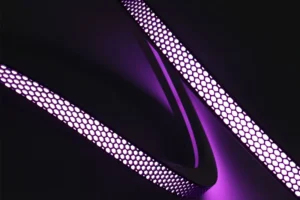
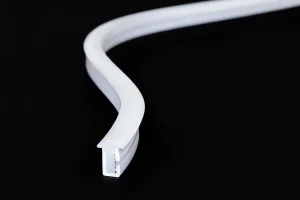
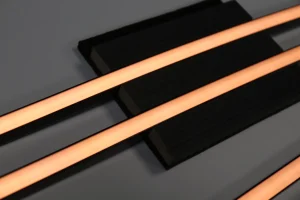
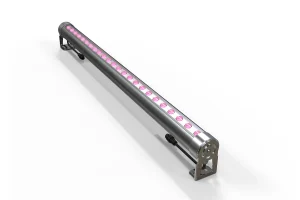
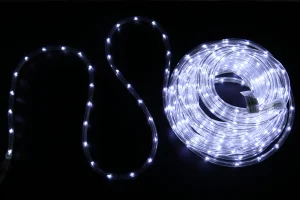
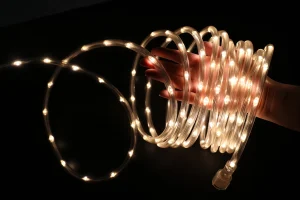
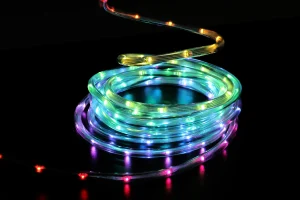


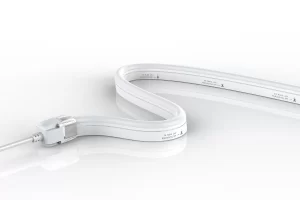
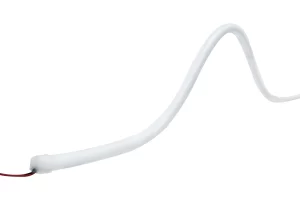

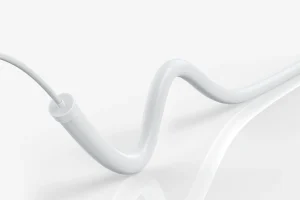
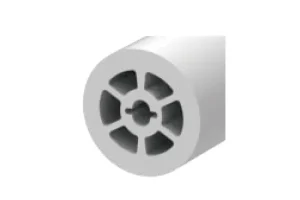
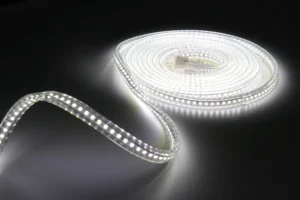


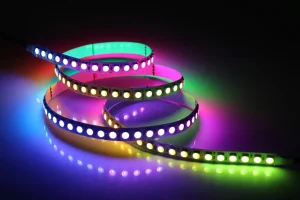
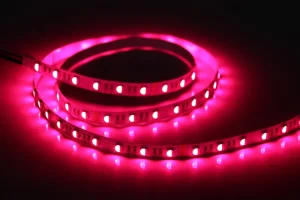
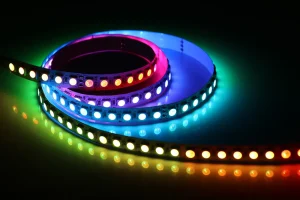
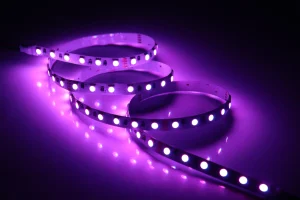
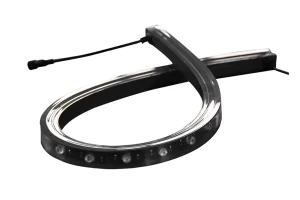
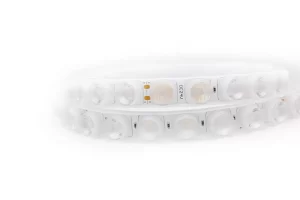
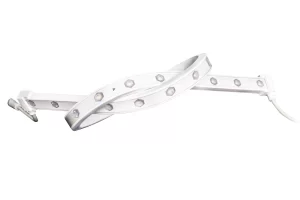
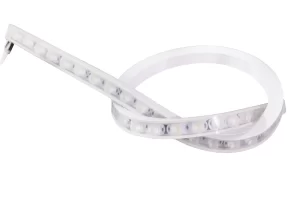
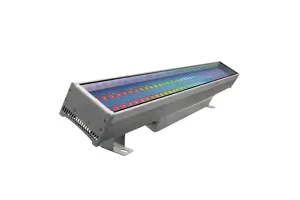
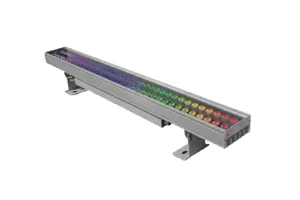
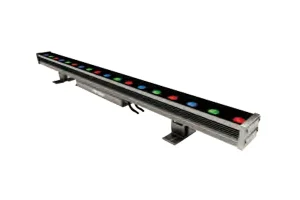
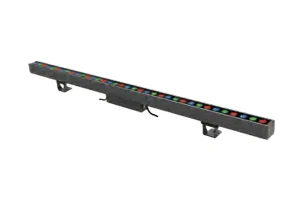


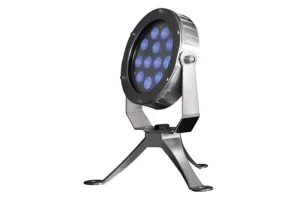
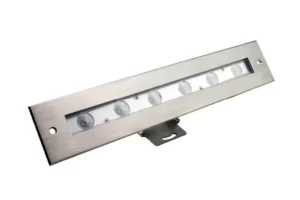
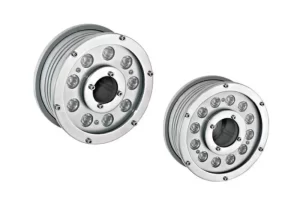


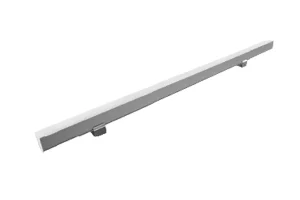
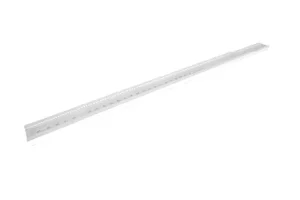
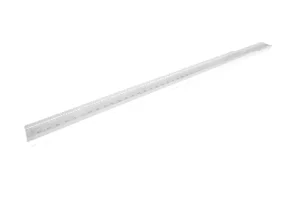
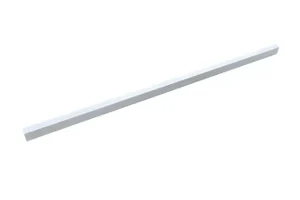
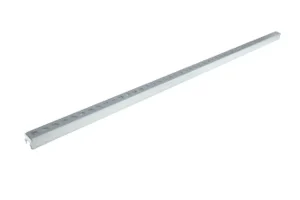
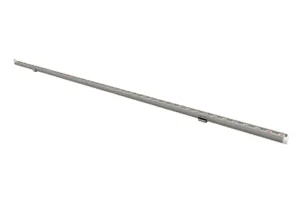


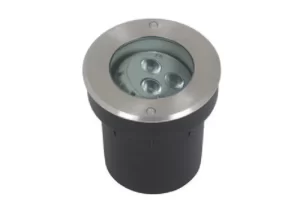


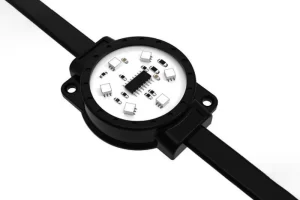


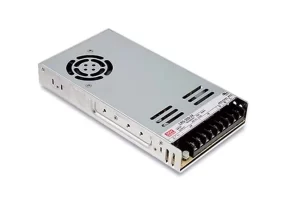


Glowing logos on store signs, curtain-wall outlines along commercial streets, gradient lighting effects in esports rooms, and immersive lighting in scenic-area night tours—these seemingly different scenes all point to the same product: flexible LED neon light strips. Once it started out by “replacing glass neon lights,” it has now grown into a niche track worth about USD 1.85 billion globally and more than RMB 4 billion domestically.
How big a business is this?
Global market: The market size is about USD 1.85 billion in 2025, with a projected compound annual growth rate of about 7.25% from 2025 to 2032. Asia-Pacific is both the largest production region and the largest consumption region, and China is the world’s core manufacturing base.
Domestic market: The market size of flexible LED neon light strips (including supporting downstream neon letter production) is about RMB 4.2–4.7 billion in 2025, with overall growth of 10%–12%.
It is worth noting that the industry has shifted from “rapid expansion” to “structural growth”—growth no longer comes from across-the-board volume increases, but from two value curves: material upgrading (silicone light strips replacing low-end PVC light strips) and intelligent premiums (RGBIC single-point addressing and programmable dynamic lighting products driving unit prices upward).
In other words: volume is growing steadily, but the money is being made in different places.
Where the money is: dual segmentation of products and applications
Product side: three dividing lines
From the three dimensions of material, lighting effect, and voltage, the industry’s dividing lines are clear: silicone (IP67/IP68, yellowing-resistant, suitable for outdoor use) is the mainstream direction, and UV-resistant weatherproof specialty silicone is a premium configuration for outdoor projects; single-color basic products have the largest installed base but the lowest gross margin, while RGB/RGBWW/RGBIC programmable products are the core of premiums; low-voltage DC12V/24V is the main specification for advertising and home decoration, with a small number of 220V high-voltage products used for engineering contours. PVC/TPU tube light strips remain the main force in low-price involution—cheap and prone to aging and yellowing, suitable only for short-term indoor scenarios.
Application side: four major tracks
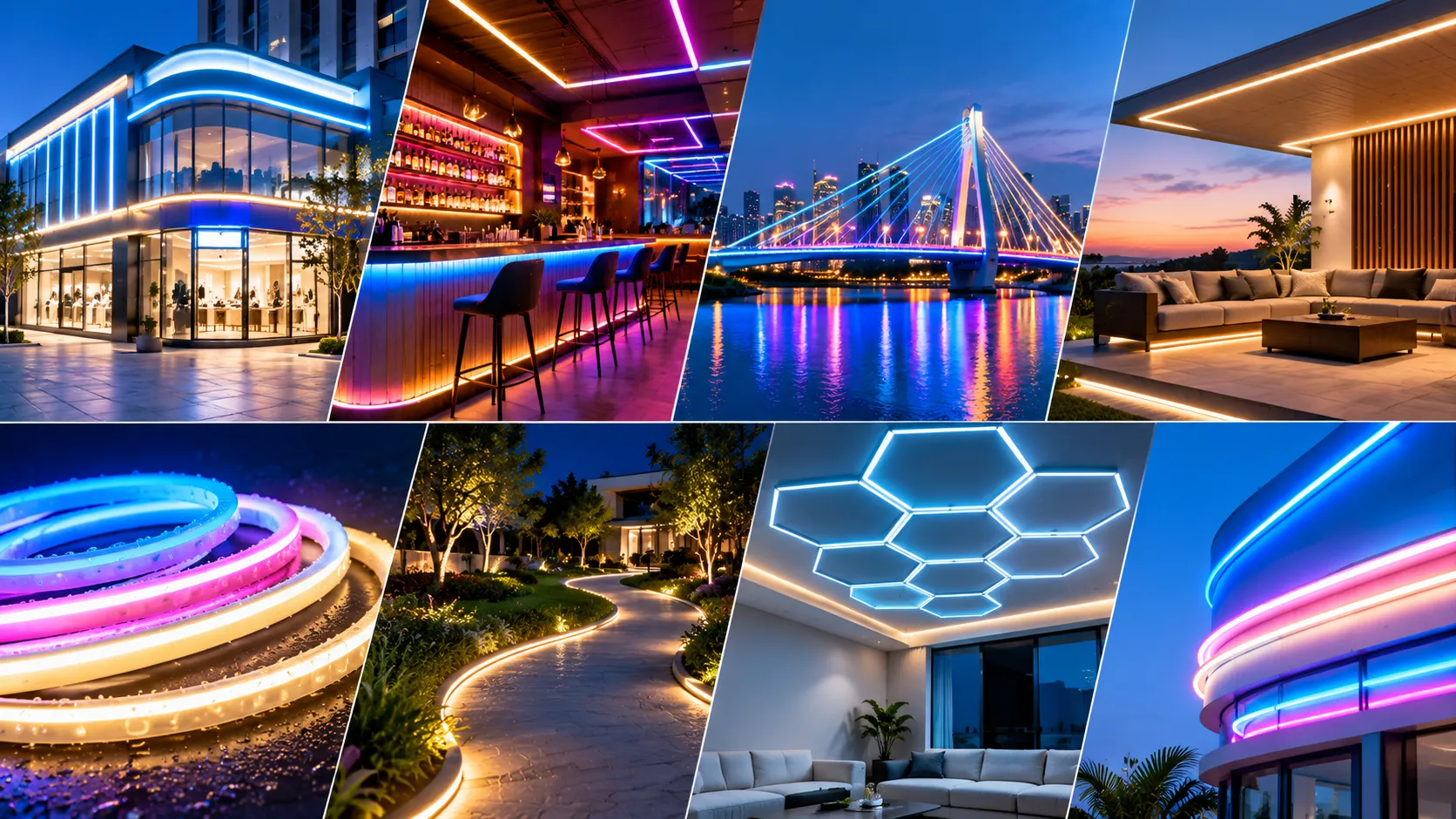
Advertising signage/neon letter fabrication (about 58%, based on B2B supporting supply statistics of light strips supplied to neon letter fabrication plants, excluding the overall cost of finished neon letter products at the end)—the absolute main force. Store signs, logo walls, and viral photo-op walls are also the largest procurement scenario for many advertising fabrication plants in Shenzhen and Zhongshan; architectural lighting and cultural tourism night tours (about 20%)—commercial streets, bridges, scenic areas, and curtain-wall contour lighting; home decoration/soft furnishing DIY (about 15%)—esports rooms, background walls, and stair ambiance, the main category for cross-border e-commerce B2C; emerging increments—exhibitions, auto shows, bar and entertainment spaces, and ambient lighting for new energy vehicle interiors.
Industry chain map: the Pearl River Delta one-hour supply chain
Upstream (raw materials): LED chips, FPC flexible printed circuit boards, driver ICs, liquid silicone/sleeving, copper wire, connectors, and power adapters. Chips and high-end ICs are concentrated among leading players, while silicone, sleeving, and wiring have mature supporting capacity in the Pearl River Delta. Upstream gross margin is relatively stable at about 22%.
Midstream (light strip manufacturing): Highly concentrated in Shenzhen, Zhongshan, Foshan, and Dongguan—SMT, silicone co-extrusion, testing, and aging are completed in one stop. The landscape presents a pyramid structure of “leading brand manufacturers + a large number of small and medium-sized white-label OEM factories”: leading factories are standardized, automated, and fully certified (CE, UL, GB/T 7000.221), focusing on engineering and large foreign trade customers with higher gross margins; small and medium-sized factories make low-price PVC, uncertified, and simple silicone products for domestic scattered orders and the low-end advertising market, with intense price competition and gross margins already compressed to 5%–10%.
Downstream: B2B advertising signage factories, lighting engineering companies, decoration general contractors, and cultural tourism integrators; C-end cross-border e-commerce and domestic DIY retail; and lighting brand owners that purchase light strips to make finished product sets.
The midstream’s hidden pain: Some non-standard products have not undergone aging verification, and materials and processes are opaque. Outdoors, yellowing, waterproofing failure, and entire sections of dead lights may appear within 1–2 quarters; market quality stratification is severe, while tendering and large engineering projects are increasingly valuing third-party test reports and compliance qualifications.
Growth engines shifting: from “replacement” to “creation”
The early industry logic was to replace old-fashioned glass neon lights (high voltage, fragile, and costly). Today, incremental growth has switched to five new engines:
policy benefits from the nighttime economy and cultural tourism night tours;
the wave of viral store renovations—sign upgrades driven by the photo-op economy;
home decoration DIY ambient lighting—short videos sparking C-end demand;
cross-border e-commerce exports—strong demand for DIY sets in Europe and the United States;
architectural linear lighting—urban renewal and green buildings encouraging energy-saving LED linear lighting.
On the technology side, costs are also being reduced and efficiency improved: FPC, silicone co-extrusion, and driver IC localization continue to advance, prices for equivalent quality continue to decline, and the threshold for adoption keeps falling.
LED neon light strip industry’s real pain points: a risk list for operators
Severe price involution—low-end PVC is highly homogenized, and some companies blindly cut costs, leading to shrunken materials and processes, creating a situation where bad money drives out good, with extremely thin profits on conventional single-color products;
rising compliance thresholds—foreign trade requires UL/CE, and domestic large engineering and government projects require third-party test reports based on GB 7000.1, GB/T 7000.221, and other standards; supporting power supplies must pass CCC certification, and products without compliance qualifications are gradually being excluded from tendering and bidding;
quality complaint risks—outdoor yellowing, water ingress, and dead lights are high-frequency complaints; low-price products often carry only 3–6 months of warranty, while the mid-to-high-end market requires 3–5 years;delivery and customization pressure—the advertising industry has many small-batch, multi-color, and irregular-cutting demands, placing extremely high requirements on light strip flexibility, cutting segments, and connector compatibility;
raw material fluctuations—cyclical fluctuations in copper, silicone, and LED chip prices continue to squeeze OEM profits.
The next 3–5 years: the watershed has appeared
Trend 1: Product upgrading, with silicone and intelligence becoming the core of premiums. The share of RGBIC dynamic lighting effects, DMX512 professional control, Bluetooth/Wi-Fi smart dimming, and adjustable color temperature products continues to rise; UV-resistant weatherproof specialty silicone for outdoor use is a must-have configuration for outdoor projects.
Trend 2: Standardization and compliance become the watershed. GB/T 7000.221-2023 “Luminaires—Part 2-21: Particular Requirements—Light Strips” has been officially implemented. Engineering and government-enterprise projects increasingly refer to this standard and combine it with GB 7000.1, IP protection ratings, CCC certification for power supplies, and export UL/CE requirements to form a comprehensive compliance threshold; relevant Bay Area standards and association/group standards will become differentiated competitiveness for leading enterprises and are expected to connect with regional policy benefits.
Trend 3: Deep channel differentiation. The B2B engineering side competes on qualifications, test reports, warranties, and integrated solutions (light strips + power supplies + control systems); the cross-border C-end competes on complete DIY sets, simple installation accessories, and multilingual control apps.
Trend 4: Expansion of emerging scenarios. Ambient lighting for new energy vehicle interiors, commercial exhibitions, and immersive digital lighting projects—light strips are evolving from “decorative components” into “digital lighting carriers.”
Trend 5: Business model upgrading. Profits from simply selling bare light strips continue to thin; value-added directions lie in supporting control systems, outputting lighting effect solutions, and proprietary-brand finished neon signs.
Four paths for industry enterprises
As an industrial cluster, China’s LED neon light strip industry has a complete supply chain and dense engineering and foreign trade customer base, and is best positioned to take the “high-value route”:
Avoid the single-color low-end red ocean—focus on IP67/IP68 weather-resistant silicone and RGBIC programmable high-end light strips, and target cultural tourism and large commercial projects;
Engage in standards development—actively participate in the formulation of national standards and group standards, enhance tendering competitiveness, and seek regional policy support;
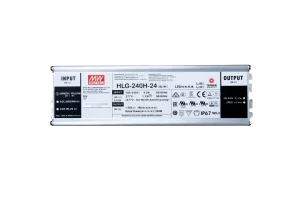
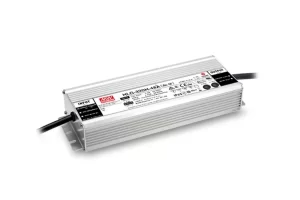
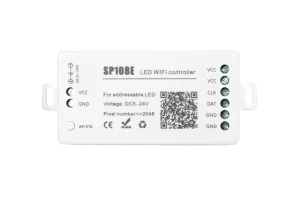
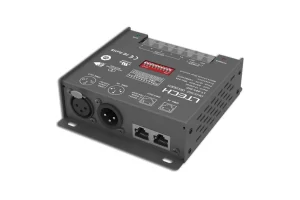
Integrated delivery—light strips + supporting power supplies + controllers + technical commissioning services, upgrading from raw material suppliers to lighting solution providers;
Cross-border going global—European and American markets have high safety certification requirements, and compliant factories enjoy obvious premiums; Southeast Asia and the Middle East have rapidly growing demand for cultural tourism lighting.
Conclusion: High-quality development rejects involution
The LED neon light strip industry is in a development stage where opportunities and challenges coexist. Facing rapid market iteration, the industry should abandon low-price involution and jointly build a healthy and orderly competitive ecosystem. Enterprises should base themselves on technological foundations, focus on product innovation, quality improvement, and scenario-based application refinement, and consolidate core competitiveness; at the same time, adhere to a dual drive of domestic and international markets, deepen domestic demand markets such as cultural tourism and commercial nightscapes, actively deploy in overseas tracks, and participate in global market competition with high-quality Chinese-made light strip products, achieving mutual promotion and progress in domestic and international markets.
Website:
Social Media: