

















1. 12V vs 24V LED strips:What are the differences
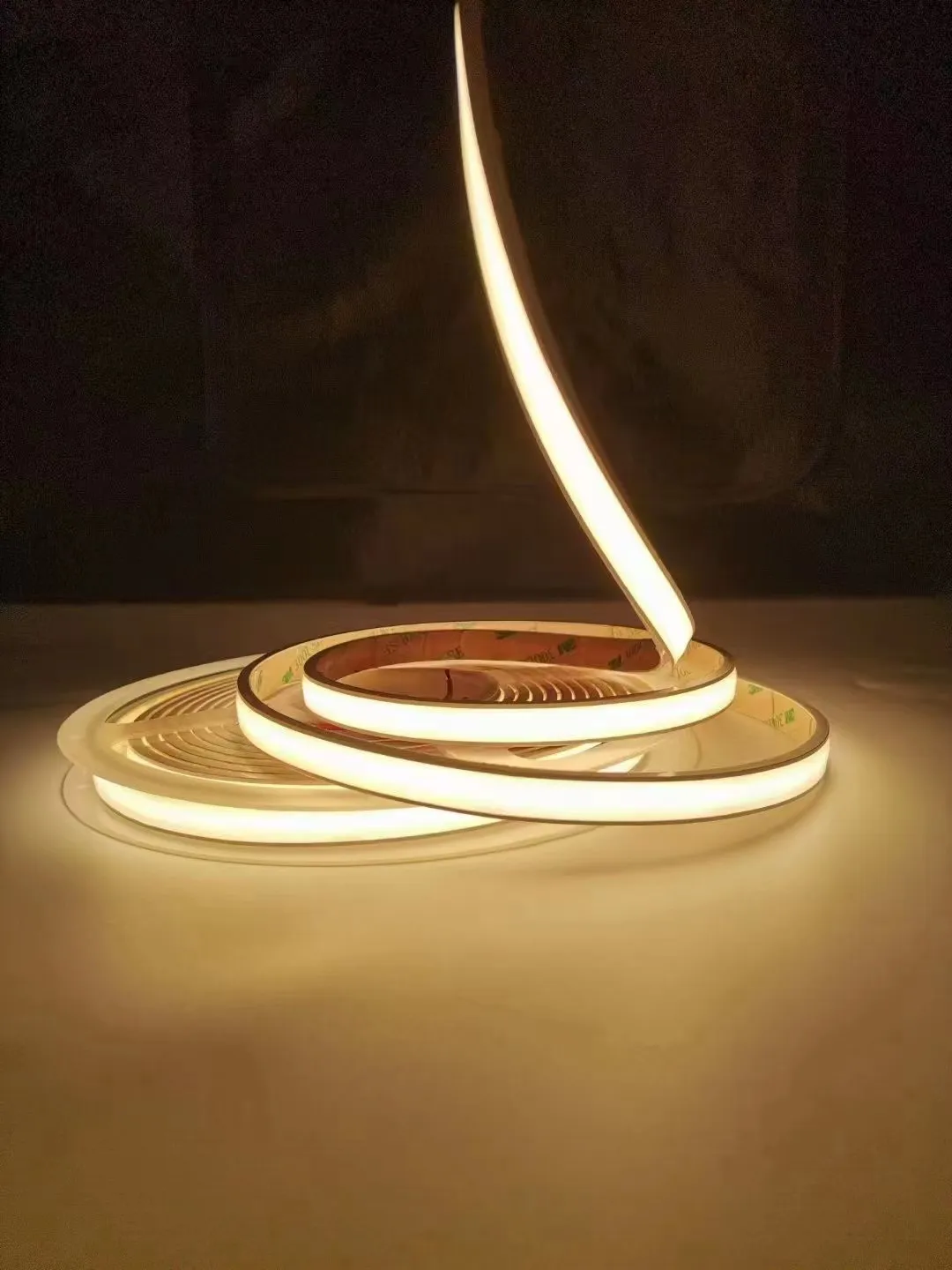
The main differences between 12V and 24V LED strips lie in four aspects: current, voltage drop, cutting length, and wiring cost.
At the same power, the current of a 12V LED strip is approximately twice that of a 24V strip. Higher current leads to higher PCB circuit board losses and a more pronounced voltage drop issue.
However, 12V LED strips also have their advantages—the cutting unit can typically be around 2.5cm, which is much more flexible than the conventional 5-10cm of 24V LED strips.
In terms of heat dissipation, the higher current causes 12V LED strips to generate more heat, resulting in faster light decay over long distances; while 24V LED strips have lower current and generate less heat, resulting in a longer overall lifespan. Therefore, the choice depends on whether you prioritize cutting flexibility or long-distance stability and lifespan.
2. Why are 24V LED strips generally recommended for long-distance lighting installations instead of 12V strips?
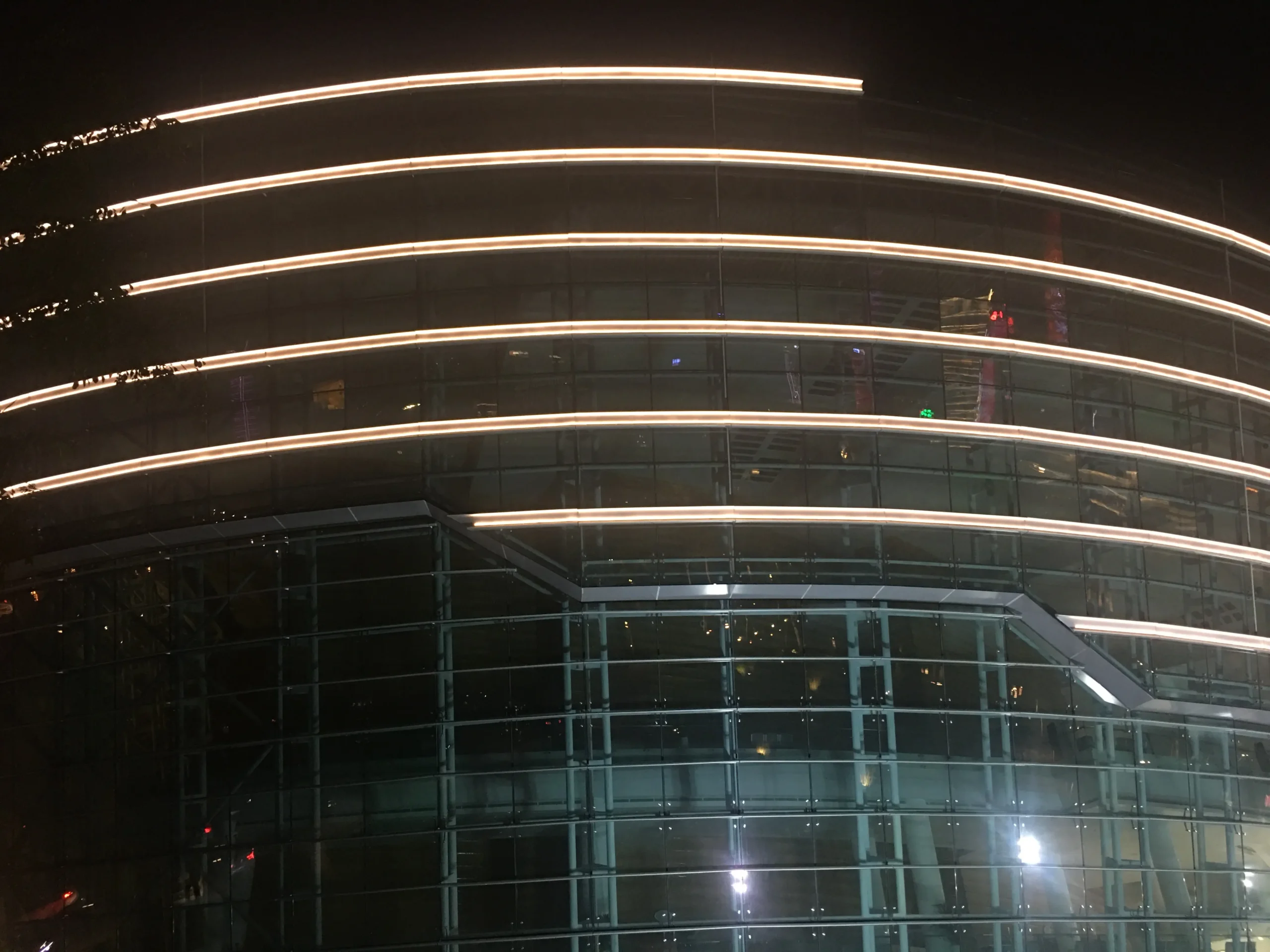
Long-distance outdoor lighting projects inevitably involve voltage drop, meaning the LED strip will be brighter at the beginning and dimmer at the end.
① 24V LED strips operate with half the current, significantly reducing circuit board resistance and losses. With appropriate power, a single strip can be connected in series for about 10 meters without noticeable color difference, eliminating the need for mid-line power replenishment. 12V LED strips tend to dim at the end after 5 meters, requiring multiple power supply points and resulting in messy wiring.
② Lower current leads to less heat generation, reducing the likelihood of aging during long-term continuous operation. This makes them suitable for long-distance projects such as commercial lighting, architectural outline lighting, and whole-house no-main-light designs.
③ Fewer wiring materials are needed, eliminating the need for thicker cables, reducing labor and material costs, resulting in a higher overall cost-effectiveness for large-scale lighting projects.
3. Where are 12V LED strip lights most useful?
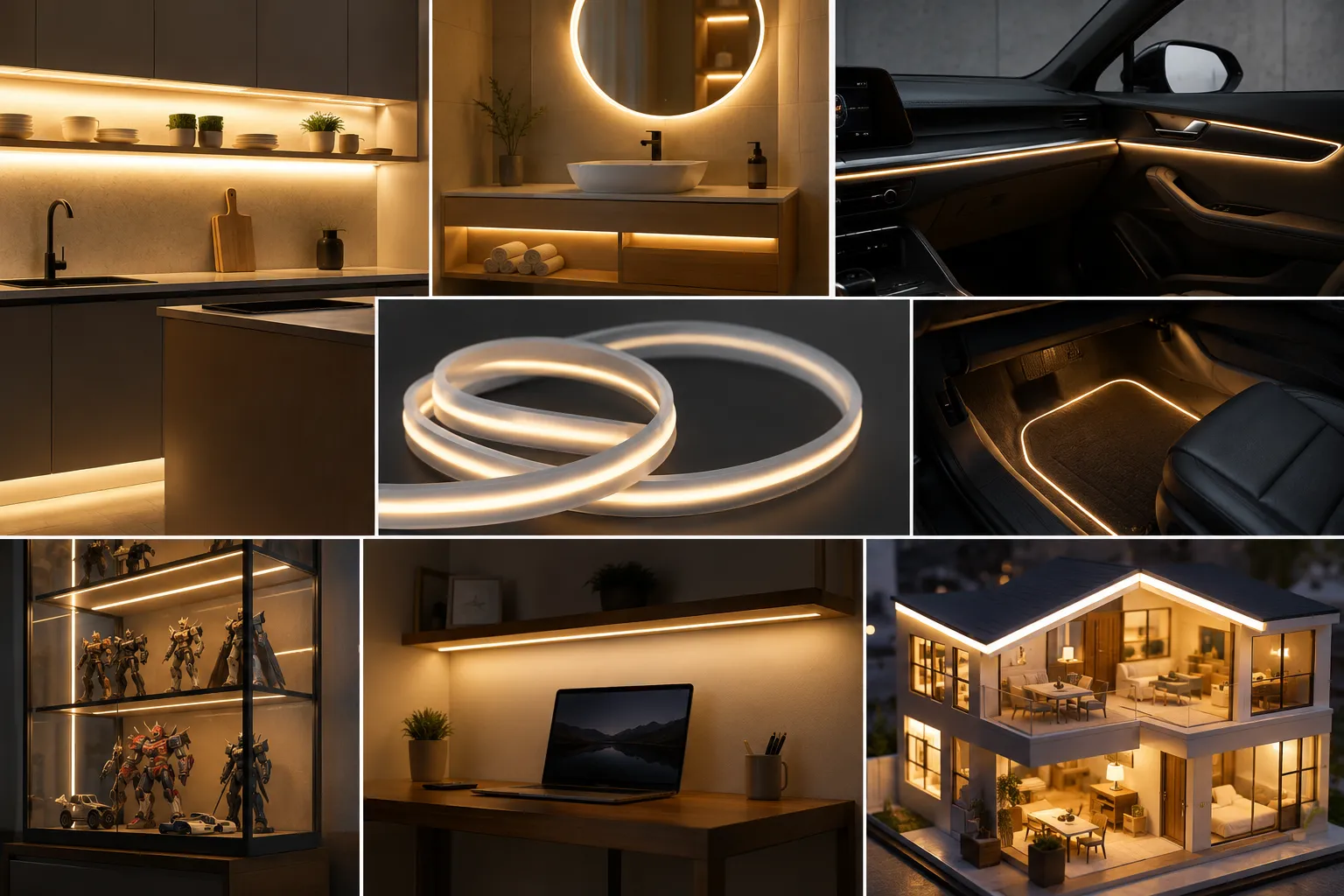
① Precise cutting: Cut to 25mm or even smaller, allowing for precise fitting in confined and irregularly shaped spaces such as cabinet and bathroom lighting, automotive interior ambient lighting, and small display cases. Low material waste and easy installation.
② Suitable for small, short-distance scenarios: Short LED strips up to 5 meters provide stable performance and require only a small power supply, making installation easy.
③ Wide range of applications: Universally applicable to automotive retrofit rendering lights, desktop ambient lighting, small DIY LED strip decorations, and localized counter lighting. Accessories are readily available.
4. Common problems encountered when buying low-voltage LED strip lights
① Forgetting to consider voltage drop: Blindly choosing 12V LED strip lights for long-distance projects can result in uneven brightness at the beginning and end of the project, leading to high rework costs.
② Choosing a power supply with no power redundancy: A fully loaded power supply is prone to flickering and light decay. It is recommended to leave a 20% power margin.
③ Using inferior copper substrates on the PCB of purchased LED strips: Thin copper substrates have poor conductivity, exacerbating voltage drop. For long-term projects, prioritize 2oz rolled copper LED strips.
④ Ignoring waterproof ratings: Using bare-board LED strips in outdoor or damp areas leads to water seepage and lamp failure in the short term.
⑤ Lack of compliant LED strip certifications: Foreign trade and municipal projects often lack UL/CE certificates. Not purchasing LED strips with full certifications like those from Mingxue Optoelectronics leads to acceptance and customs clearance issues.
5. Common Scenarios for Low-Voltage LED Strips
24V LED Strip Applications: Whole-house lighting without main lights, building outlines, courtyard lighting, long linear lights in showrooms, large commercial stores, landscape projects, etc., with lengths exceeding 5 meters.
12V LED Strip Applications: Automotive interior modification, cabinet underlights, short LED strips for display cabinets, DIY desktop ambient lighting, short-distance indoor localized lighting.
Recommendations for Purchasing LED Strips
With 18 years of dedicated craftsmanship, Wilgex understands that the successful delivery of every lighting project relies on scientific initial selection: 12V LED strips are used for intricate designs within 5 meters, while 24V LED strips are used for longer installations over 5 meters. This is further enhanced by 3oz thick copper PCBs, ample power redundancy, and IP67/IP68 high-level waterproofing.
This is not only a construction standard but also a solemn commitment to the project’s lifespan. Leveraging our 5000-square-meter production base, we mass-produce 12V and 24V engineering LED strips, offering dual-color temperature, RGB, and silicone waterproof customization options.
Our comprehensive international certification system, including UL, CE, and ISO, covers all scenarios from home decoration to commercial, landscape, and international trade. From precise voltage drop simulation to one-stop solution design, Wilgex’s direct-supply model is dedicated to completely solving your pain points such as voltage drop, light decay, and non-compliance with acceptance standards. In this challenging lighting market of 2026, if you are facing stringent engineering selection needs, please contact our LED strip experts.
Website:
www.wilgex-led.com
Social Media:
www.facebook.com/WilgexLEDNeonFlex