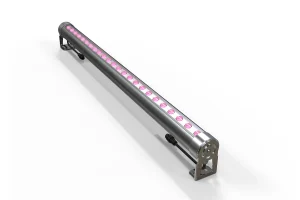
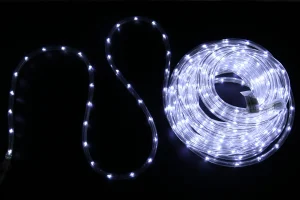
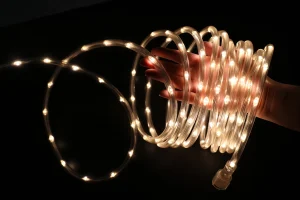
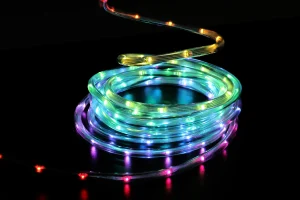


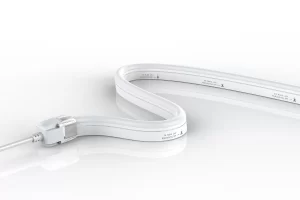
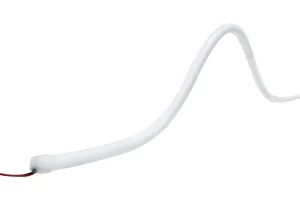

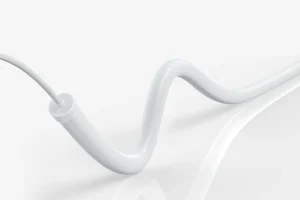
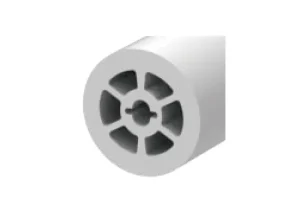
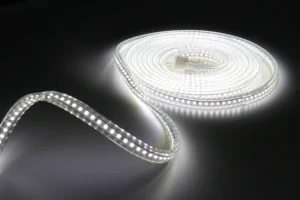


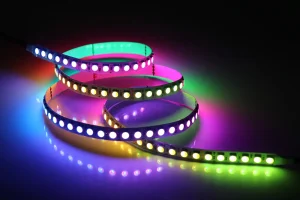
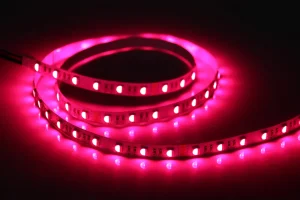
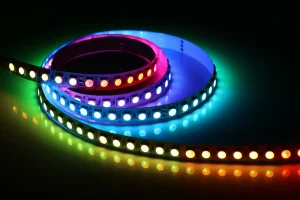
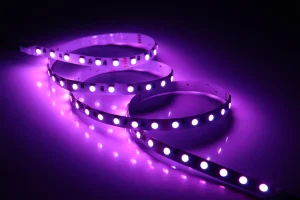
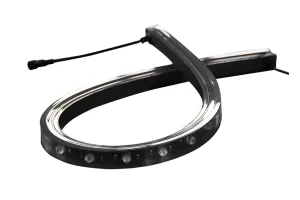
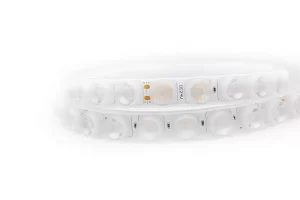
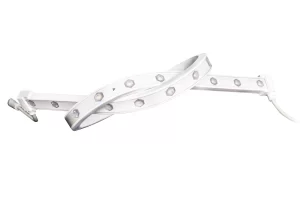
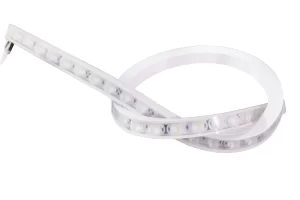
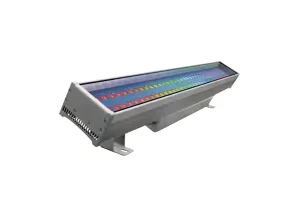
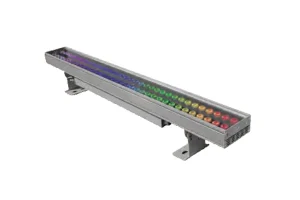
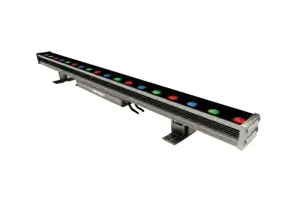
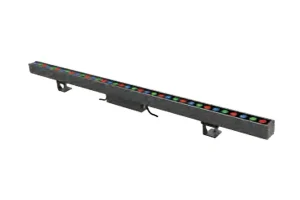




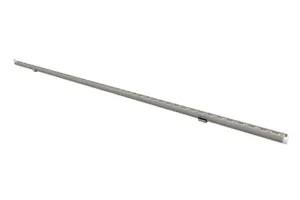


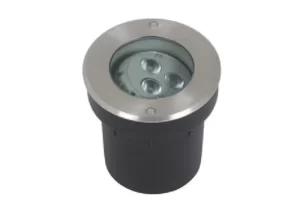


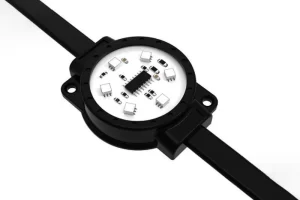


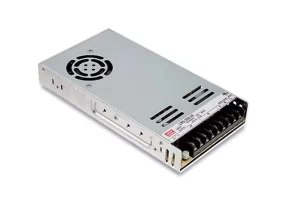
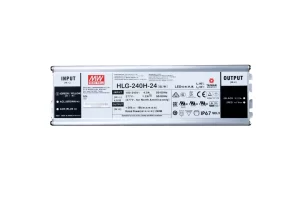
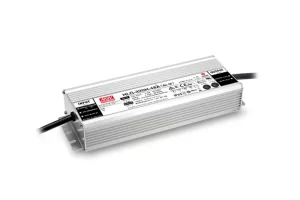
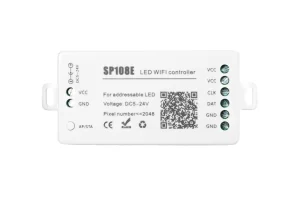
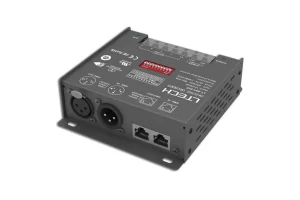


Whether it’s a home lighting system with COB linear LED strips and dual-color temperature ambient light strips, or an outdoor building outline IP67 waterproof neon LED strip and DMX512 dynamic pixel light, many interior lighting designers, engineering procurement personnel, and renovation workers encounter a common problem after installation: the end of the LED strip near the power supply is bright, but the brightness gradually decreases towards the end. RGB color-changing LED strips even exhibit color shift, pinkish tinge, or warming at the end. This phenomenon is known in the industry as LED strip voltage drop. It’s not a product defect, but rather a physical issue related to low-voltage linear lighting wiring and board design.
Wilgex, with 18 years of experience in LED linear lighting strips and a 5000-square-meter automated production base, has optimized thickened copper foil PCB LED strips for long-distance lighting scenarios, paired with standardized voltage drop wiring solutions. Below, we’ll break down the voltage drop principle in layman’s terms, differentiate between 12V and 24V LED strips, and share voltage drop avoidance solutions that can be directly applied in engineering projects.
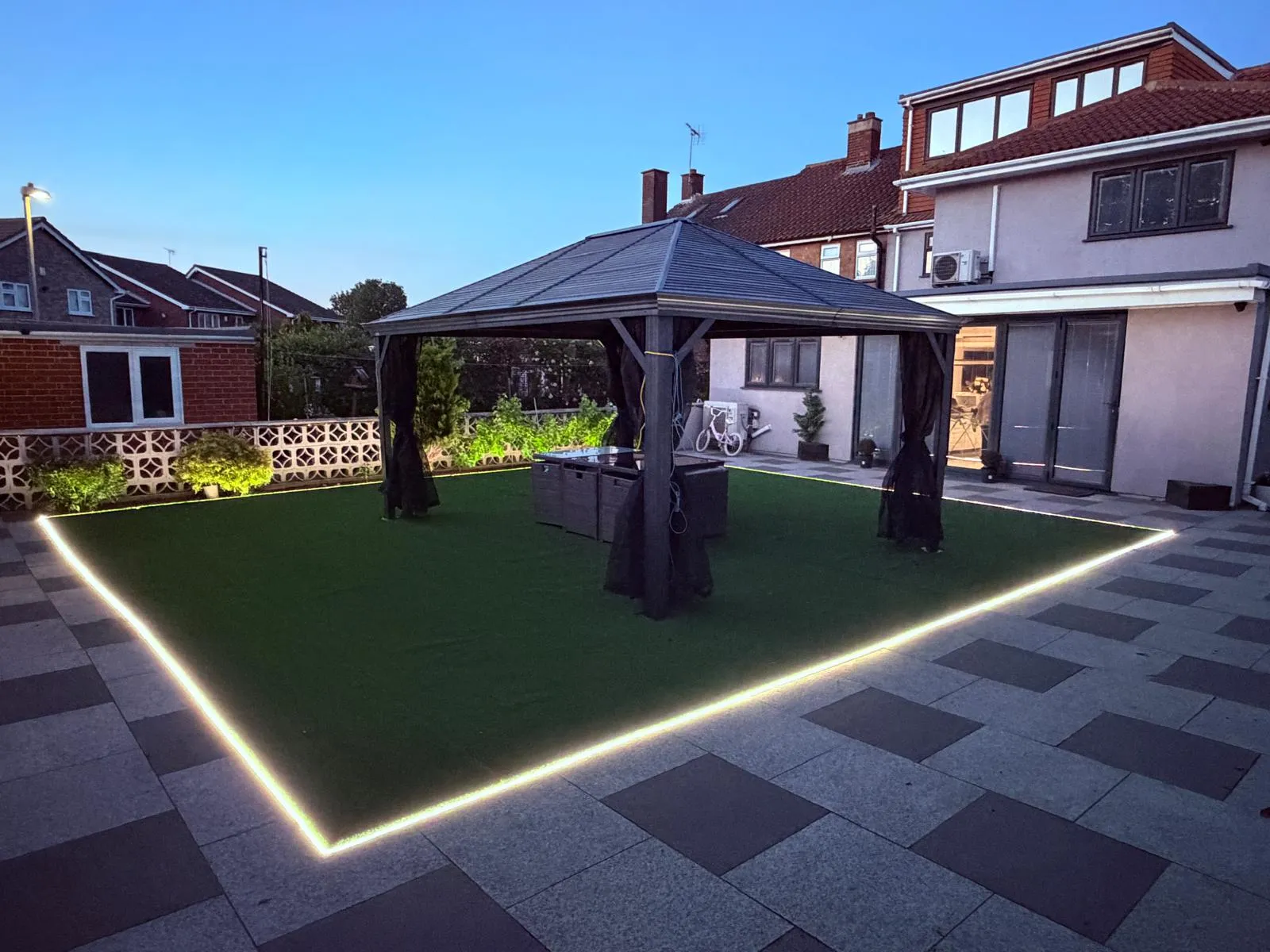
1. What is LED Strip Voltage Drop? What are the specific phenomena?
The low-voltage flexible LED strips we usually use rely on copper foil on the FPC circuit board for conductivity. The copper foil and the external wires themselves have resistance.
The current flows from the driver power supply to the end of the LED strip, constantly losing voltage along the way. The farther away from the power supply, the lower the actual voltage received by the LED chip; this is voltage drop.
Voltage drop usually leads to two very obvious lighting faults:
1.1 Single-color/dual-color temperature linear LED strips: The tail light is noticeably dim, the entire strip has distinct light and dark areas, ruining the design quality of concealed ceiling lighting and storefront window lighting;
1.2 RGB dynamic color-changing LED strips: The three-color voltage ratio is unbalanced, the distant image appears reddish and warm, the dynamic flowing light has color breaks, and the effect of outdoor building lighting at night is greatly reduced. Voltage drop in short-distance cabinet and wardrobe decorative LED strips is difficult to detect with the naked eye, but in long-distance commercial lighting and architectural outline linear lights (over 10 meters), the voltage drop problem will be fully exposed.
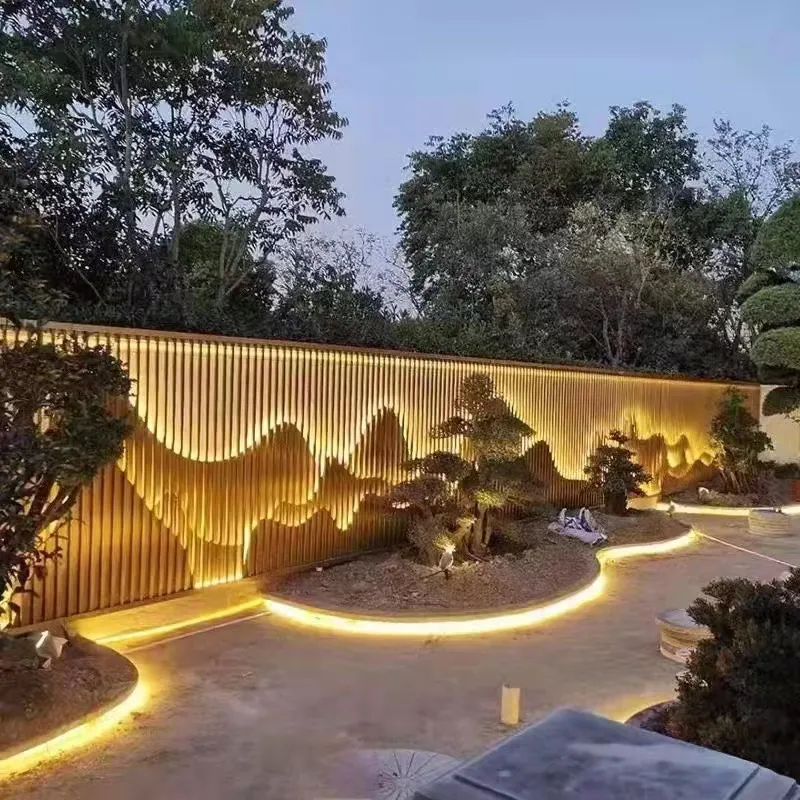
2. Reasons for Voltage Drop in LED Strips
Voltage drop, in essence, boils down to Ohm’s Law: V = I × R – Voltage Loss = Current × Total Circuit Resistance. Resistance mainly comes from three sources:
2.1 The resistance of the copper foil on the FPC circuit board itself. The longer the LED strip, the longer the conductive copper foil path, naturally increasing the resistance. Cheap home-use LED strips have very thin copper foil, resulting in higher resistance; the increased length directly doubles the voltage drop. High-end engineering LED strips use 2oz thickened rolled copper, significantly reducing circuit loss.
2.2 The resistance of the external power supply cable. If the wire between the power supply and the LED strip is too thin or too long, it will add extra resistance, increasing voltage drop.
2.3 The sum of the total current in the LED strip. Higher power and denser LED chips result in a larger overall operating current. Voltage drop is directly proportional to current, which explains why high-density COB LED strips are more prone to dimming at the tail end than ordinary surface-mount LED strips.
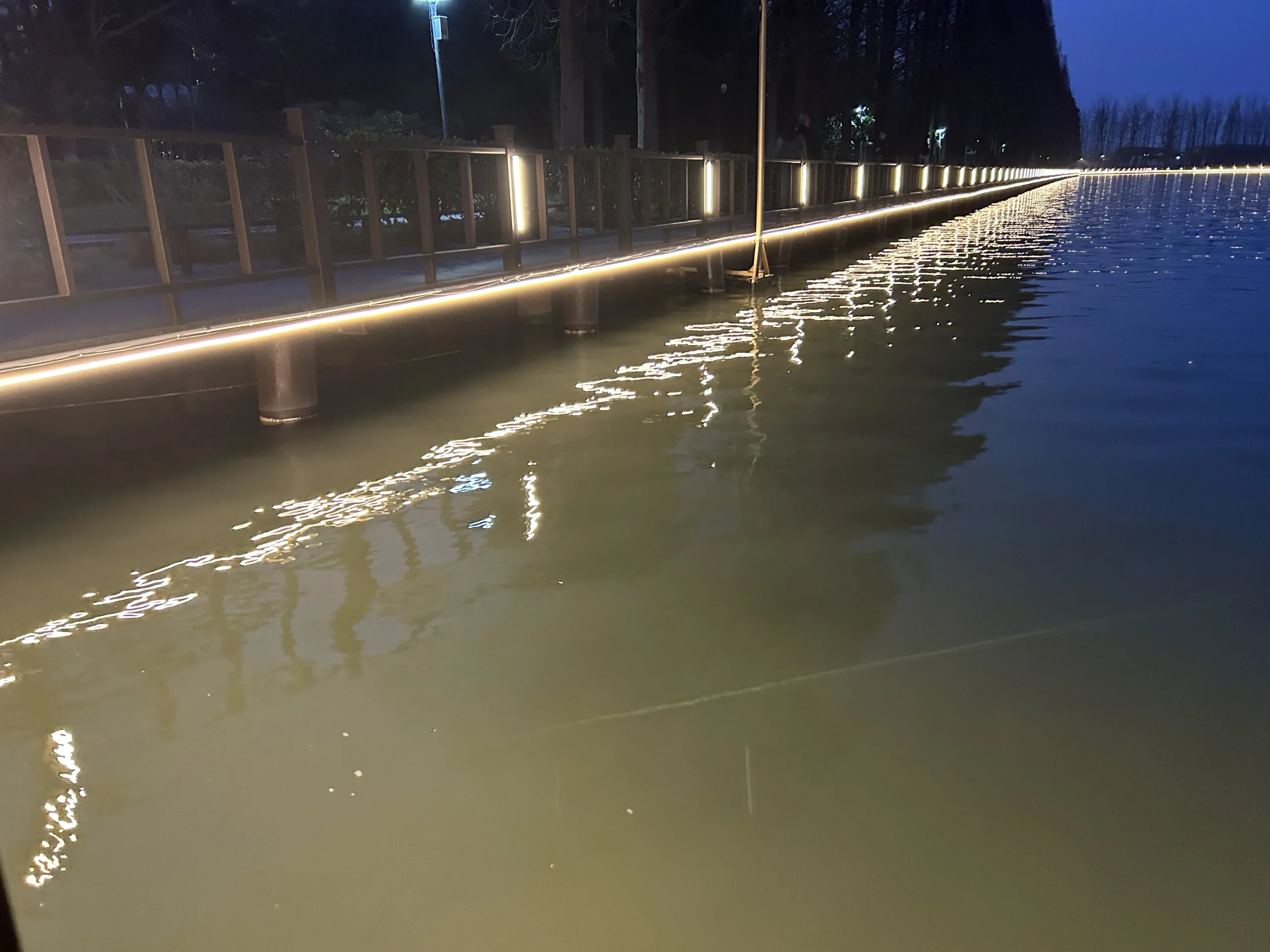
3. Why are 12V residential LED strip lights more prone to voltage drop than 24V commercial LED strip lights?
The mainstream low-voltage linear lighting on the market comes in two specifications: 12V and 24V LED strip lights. Under the same power conditions, the difference in operating current between the two is double, directly determining the severity of the voltage drop. For example: For a 24W/m waterproof linear LED strip light, the operating current of a 12V strip light is approximately 2A, while that of a 24V strip light is approximately 1A.
Voltage drop is directly proportional to current; the 12V strip light draws a larger current, resulting in nearly twice the voltage drop of the 24V strip light over the same length. Industry standard practice dictates that 12V strip lights should not be powered for more than 5 meters at a single end; beyond that, they will dim noticeably. 24V strip lights can maintain a visible color difference for 8-10 meters at a single end. Therefore, lighting designers generally prefer 24V commercial LED strip lights for long-distance exterior wall lighting and long strip wall washer lights in shopping malls.
4. Voltage Drop Eliminates the Need for Rework: Completely Avoidable During Initial Lighting Design
The vast majority of uneven brightness and RGB color cast issues in LED strips stem from inadequate initial wiring planning, not from substandard strips. In the design phase of whole-house lighting without a main light fixture or outdoor landscape lighting schemes, implementing these four measures can significantly eliminate voltage drop:
4.1 Use 24V thickened copper foil LED strips
4.2 Control the length of each strip segment
4.3 Dual-circuit power supply at both ends
4.4 Add power supply points in the middle segments.
For ultra-long building outlines and linear lighting projects in large shopping mall atriums, Wilgex will provide a customized voltage drop calculation plan based on the project’s total length and power, combined with thickened copper substrate LED strips and multi-point power supply wiring diagrams, balancing the voltage of the entire LED strip at the system level to ensure high consistency in brightness and color from start to finish.
Many interior lighting designers and lighting contractors frequently encounter after-sales issues such as inconsistent brightness at the beginning and end of light strips and color deviation at the tail of RGB lights after implementing projects without main lights or in outdoor building landscapes. Repeated rework increases labor and wiring costs, and can even lead to client rejection. The core reason is the selection of thin copper foil low-voltage light strips and the lack of voltage drop wiring planning in the early stages.
Wilgex with 18 years of experience in linear lighting strips, has a 5000-square-meter automated production line that differentiates between short ambient lighting strips for home decoration and long-distance linear lighting strips for engineering projects. Engineering-grade products are uniformly equipped with 2oz thickened copper foil FPC substrates, available in 12V and 24V dual-voltage specifications, significantly reducing line voltage loss. For ultra-long lighting scenarios such as shopping mall atriums, high-rise building exteriors, and scenic bridges, our technical team can provide free voltage drop calculations, customized multi-point power supply wiring solutions, and a one-stop supply of IP67/IP68 waterproof neon light strips, DMX512 dynamic pixel lights, and COB high CRI linear lights.
Learn more about Wilgex LED Neon Lighting Solutions:
Website:
www.wilgex-led.com
Social Media:
www.facebook.com/WilgexLEDNeonFlex