















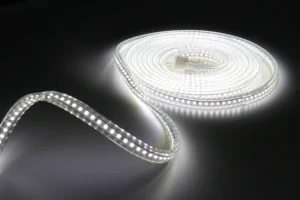

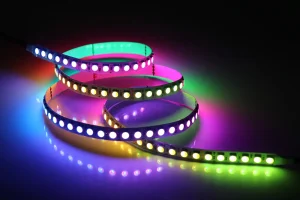
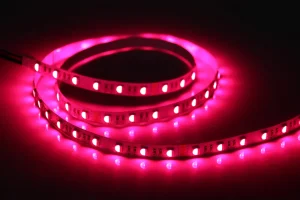
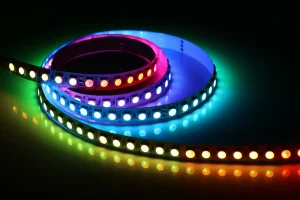
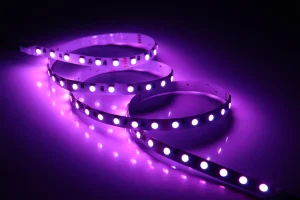
























LED color temperature, simply put, is how the human eye perceives a light source—whether the light color is yellow or white, cool or warm. Its unit is K (Kelvin).
Commonly Used Lighting LED Color Temperatures
The color temperature of LED strip lights is mainly divided into three major categories: warm white (about 2200K–3500K), neutral white (about 4000K–6000K), and cool white (above 6500K). Warm white is between 2500K and 3500K; it tends toward yellow and gives a warm visual feeling. Neutral white is between 4000K and 6500K; its color resembles the midday sun and provides better illumination. Cool white is above 7000K and tends toward a cooler color.
The lower the color temperature value, the warmer the light color. The higher the color temperature value, the cooler the light color.
Throughout the day, the color temperature of daylight also changes constantly. For example, before sunrise it is blue; after sunrise it is orange; at noon it is white; and in the evening it is yellow, and so on. The reason for the change in sunlight color is mainly the reflection effect of the atmosphere, not because the sun’s temperature has changed greatly.

The color temperature of daylight changes with climate, season, time, and weather, among which time and weather have the most obvious effects. The color of light also greatly affects the feeling of an entire space, and different occasions require different lighting. When talking about the importance of lighting, it is often easily overlooked. The right lighting choice is often an organic unity of “aesthetic” needs and “health” needs. Aesthetics lies in: 1.creating a living atmosphere; 2.matching the overall style. Health means comfortable, soft, and non-glaring light that does not easily cause physical fatigue.
So how can we create light that meets both aesthetic and health needs? Here is a little trick: look at the color temperature!
Common LED lighting color temperatures are 3000K, 4000K, 5000K, and 6000K.
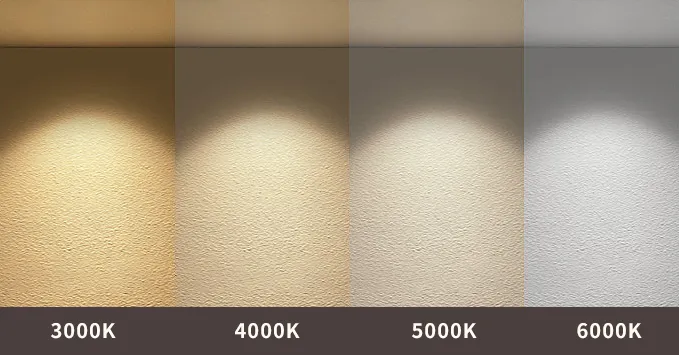
Warm white light is around 3000K. It is similar in color to incandescent light and has a relatively high red component, giving people a warm, healthy, and comfortable feeling. It is suitable for bedrooms or relatively cold places. When buying bedroom lighting, you will find that many bedroom lights have three adjustable modes: warm light, neutral light, and white light. Among them, warm light is very suitable and helps people fall asleep.
Neutral light is around 4000K, close to natural light, with white light tending toward yellow. The lighting color temperature in large shopping malls and hotels is basically around 4000K; the light is soft and makes people feel pleasant, comfortable, and peaceful.
Under normal circumstances, living room lighting is best with warm tones. During the day, the color temperature can be kept between 5400K and 6500K, while at night, warm white light can be used; the color temperature should generally be below 5400K, preferably a standard warm white light source of 2800K–3200K.
Cool white light is around 6000K and is also called neutral white or cool white. The EU standard sets the maximum color temperature at 6000K. The light is completely white with a slight blue tint, tending toward a cool color. It gives a bright feeling and helps people concentrate. It is suitable for home kitchens, offices, classrooms, drafting rooms, library reading rooms, exhibition display windows, and so on.
In summary, the color temperature of household lighting is generally between 2500K and 5000K. The most commonly used is warm white light at 3000K–4000K. This range is closer to natural light and is neither too yellow nor too white.
In home lighting, there is no exact standard for choosing the color temperature of lamps. It needs to be decided based on the decoration style, the illuminated space, and personal preference. You might first refer to the above introduction; choosing what you like may be the most suitable.
Summary: When choosing color temperature for lighting, you must be clear about the lighting needs of the environment.
In low-illuminance settings, low color temperature light makes people feel pleasant and relaxed; high color temperature can make people feel dim and chilly. In high-illuminance settings, low color temperature light makes people feel stuffy and hot; high color temperature makes people feel comfortable and pleasant.
Workplaces require high-illuminance, high-color-temperature environments, while rest areas require low-illuminance, low-color-temperature environments. You can purchase suitable lamps according to the actual application scenario, or consult a professional lighting designer.
Does Color Temperature Affect the Color Rendering Index (CRI)?
Color temperature and color rendering performance are independent of each other, but they each affect visual comfort. Whether it is color temperature or color rendering index (CRI), if inappropriate, both can cause eye fatigue.
How to Scientifically Choose Color Temperature: Analysis of Key Dimensions
1. Match by Space Function
For bedrooms and living rooms, 2700K–3000K is suitable. Low color temperature activates the parasympathetic nervous system, lowers heart rate, and creates a relaxed feeling.
For kitchens and bathrooms, 4000K–5000K is suitable. Neutral light balances warmth and clarity, avoiding shadow interference when cutting vegetables or cleaning.
For studies and offices, 4000K (CRI Ra ≥ 90) is suitable. It suppresses melatonin secretion and improves concentration; high CRI restores the colors of books.
For commercial displays, dual color temperature adjustable lighting (2700K–6500K) is suitable. For jewelry, use 4000K+ and high CRI (Ra ≥ 95) to highlight gloss; for clothing, use 3000K to enhance fabric texture.
2. Dynamically Adjust According to Circadian Rhythm
During the day (6:00–18:00), use 4000K–6500K cool white light to improve alertness and work efficiency.
In the evening (18:00–22:00), gradually step down to below 3000K to promote melatonin secretion and prepare for sleep.
3. Adapt to Different User Groups
For children and adolescents, nighttime color temperature should be ≤4000K to avoid blue light disrupting sleep rhythm (national standard GB/T 9473-2022).
For older adults, use 3000K warm light plus an RG0 blue-light hazard-free rating to relieve visual fatigue caused by macular pigment degeneration.
4. Personalize According to Decoration Style
For minimalist or industrial styles, use ≥4000K cool white light to enhance lines and a modern feel.
For warm or retro styles, use ≤3000K warm white light to enhance the softness of wood and fabric materials.

Summary of Recommendations
Basic needs: choose 3000K warm white for bedrooms, 4000K neutral white for studies, and 5000K neutral white for kitchens.
Advanced needs: prioritize dual-color-temperature smart models (2700K–6500K) to dynamically adapt to the circadian rhythm.
Natural light is the healthiest “light source,” and scientifically selecting and matching color temperature is a key step in integrating nature’s wisdom into artificial lighting.
Website:
Social Media: